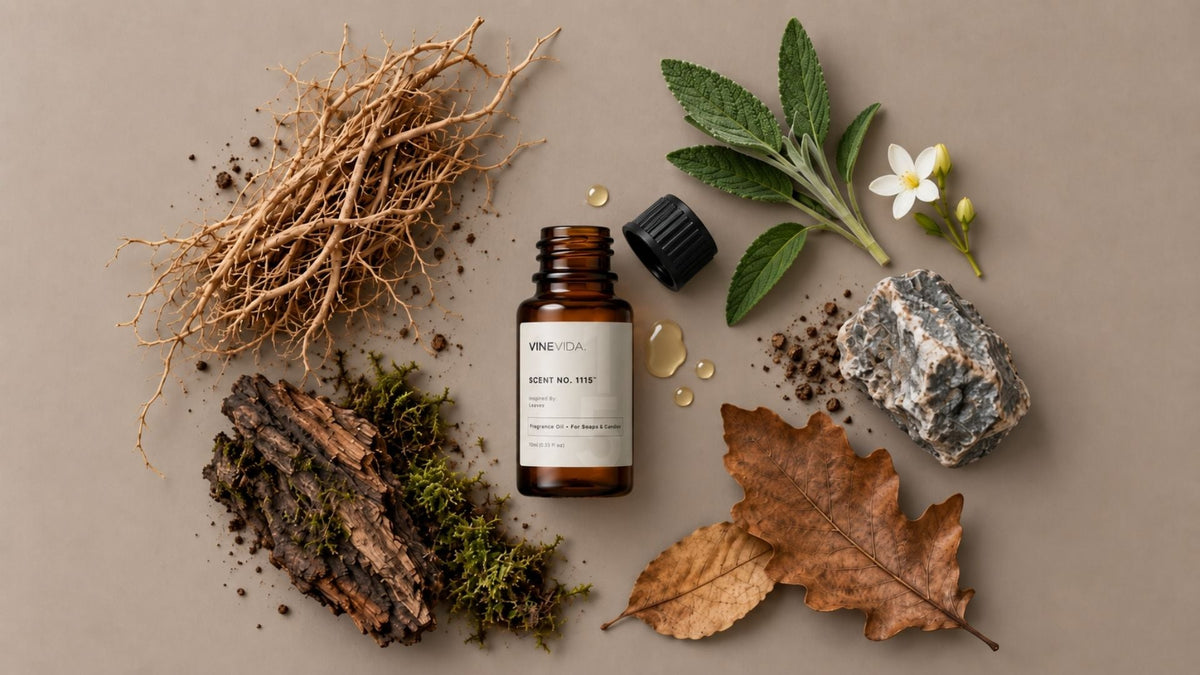
Earthy scents are fragrances that evoke soil, roots, moss, fallen leaves, minerals, bark, herbs and the forest floor. Depending on the composition, they can smell damp, dry, green, rooty, fresh, clean, warm, smoky or dark.
An earthy perfume does not necessarily smell like literal dirt. Perfumers can balance earthy effects from materials and accords such as patchouli, vetiver, mossy notes and mineral effects with woods, citrus, florals, musk, amber-style accords, herbs and resins to create more wearable fragrance profiles.
If you're trying to understand what “earthy” means in a fragrance description, compare different earthy scent styles, or decide which type of earthiness suits your preferences, this guide covers the main fragrance notes, perfume styles and scent combinations to know. You'll also learn how earthy and woody scents differ, how earthy floral combinations work, and how to narrow down the profile you're most likely to enjoy.
What Is an Earthy Scent?
An earthy scent is a fragrance character that evokes soil, roots, moss, vegetation, forest floors Earthy is best understood as an olfactory character rather than a single ingredient or standardized fragrance family. A fragrance may smell earthy because one material, such as patchouli, is dominant, or because several notes and accords work together to create a grounded, soil-like, rooty, mossy or mineral impression.
That character can be obvious or subtle. In some perfumes, earthiness may recall damp ground or forest floor; in others, it sits beneath citrus, florals or woods and adds depth without smelling literally like soil.
Fragrance notes such as wet stone, forest floor or mineral should also be read as scent descriptions rather than assumed ingredient lists. These effects are often created through accords made from several aromatic materials.
What Do Earthy Scents Smell Like?
Earthy scents can smell damp, rooty, mossy, green, dry, mineral, dark or smoky. Some recall wet soil and shaded forest floor, while others are closer to dry roots, herbs, stone, dust or charred wood.
|
Earthy direction |
What it may bring to mind |
|
Damp & soil-like |
Wet earth, forest floor, soil after rain |
|
Rooty |
Dry roots, grasses, freshly disturbed ground |
|
Mossy |
Moss, damp vegetation, shaded woodland |
|
Green |
Leaves, herbs, stems, living vegetation |
|
Dry & mineral |
Dry ground, stone, dust, roots |
|
Dark & humid |
Damp woods, decaying leaves, dense forest |
|
Smoky & earthy |
Smoke, charred woods, dry roots, incense |
There is no single earthy smell. A fragrance can sit on the fresh, green side of the spectrum or move toward something much drier, damper or darker, so two scents described as earthy may smell very different from each other.
What Actually Makes a Perfume Smell Earthy?
Earthiness in perfume can come from one dominant material or from several notes working together. Patchouli, vetiver, mossy effects, green materials, woods and constructed mineral or soil accords can all contribute, but they create very different kinds of earthiness.
Patchouli
Few materials are as strongly associated with earthy fragrance as patchouli. It may smell woody, herbal, camphoraceous, sweet or dark as well as earthy, depending on the material and what surrounds it. Citrus can brighten it, florals can soften the contrast, and woods or musk can make it feel smoother and more polished.
Vetiver
Vetiver tends to bring a drier kind of earthiness, with rooty, grassy and woody qualities and, in some compositions, a smoky edge. Because it sits naturally between earthy and woody profiles, it works across both fresh and darker fragrance styles, and its vetiver scent profile can vary considerably.
Mossy Materials and Accords
Mossy effects lean more toward shaded vegetation and forest floor than bare soil. They can feel damp, green or dry depending on the composition and are closely associated with the mossy depth found in chypre-style fragrances.
Patchouli + Woods
Pairing patchouli with woods shifts the focus toward a fuller forest impression. Cedarwood can make the blend drier and more structured, while sandalwood usually gives patchouli a smoother, warmer backdrop.
Green Materials
Not every earthy fragrance needs to feel dark or heavy. Leafy, herbal and stem-like notes can make the composition feel more alive, bringing out the sense of vegetation around the earth rather than emphasizing soil alone.
Mineral and Soil Accords
Wet stone, clay, dust, rain-soaked ground and other mineral impressions are often created through accords rather than taken from one literal natural extract. Several aromatic materials may be combined to suggest those smells, which is why there is not always one essential oil that reproduces wet earth exactly.
Petrichor: Why Rain Can Smell Earthy
Petrichor is the distinctive earthy smell associated with rain falling on dry ground. The term was coined in 1964 by Australian scientists Isabel Joy Bear and Richard Grenfell Thomas while studying the characteristic odor released when dry soils and rocks become moist.
Geosmin is one of the compounds closely associated with the familiar smell of earth and soil, and humans can detect it at very low concentrations. It contributes to earthy odor, but geosmin and petrichor are not the same thing; the smell of rain on dry ground is a broader sensory effect.
In perfumery, rain-soaked soil, wet stone and mineral effects can be built through accords that combine earthy, damp, mineral, green and airy facets. The result can suggest a rain-darkened path or freshly wet ground without relying on a literal extract of wet soil.
The Main Types of Earthy Scents
Earthy scents can be grouped by the kind of environment or atmosphere they suggest rather than by one formal fragrance-family system. Some lean damp and forest-like, while others feel greener, drier, softer or much darker.
Forest Earthy
Moss, patchouli, vetiver, fir, leaves and woody notes can create the impression of shaded woodland, especially when damp or leafy facets are prominent.
Green Earthy
Here, the focus shifts toward living vegetation and freshly disturbed ground. Vetiver, herbs, leaves, moss and green accords can make the scent feel crisp and natural rather than heavy.
Dry Earthy
Dry-earthy fragrances suggest roots, stone, dry ground and timber instead of a damp forest floor. Vetiver, dry woods, mineral effects and touches of leather often support this direction.
Dark Earthy
Patchouli, oud-style woods, smoke, leather and resins can push earthiness into a denser, more dramatic space. The impression may lean toward dark soil, old wood, wet bark or deep forest.
Soft Earthy
Sandalwood, musk, gentle patchouli and florals can keep the earthy character present without making soil or moss the main impression. This style tends to feel smoother and less literal.
Earthy Floral
Flowers bring lift, while patchouli, vetiver or mossy notes add depth underneath. Rose with patchouli, jasmine with vetiver, and violet with mossy or woody notes are common examples.
Earthy Scents vs Woody Scents
Earthy scents tend to evoke soil, roots, moss, leaves and forest floor, while woody scents focus more on bark, timber and wood itself. They often appear together in fragrance, but they describe different scent impressions.
|
Earthy scents |
Woody scents |
|
|
Usually evokes |
Soil, roots, moss, leaves, forest floor, minerals |
Bark, timber, trees, dry or polished wood |
|
Common materials or effects |
Patchouli, vetiver, mossy accords, green and mineral effects |
Cedarwood, sandalwood, oud-style notes, cypress |
|
Typical character |
Rooty, mossy, damp, green, mineral |
Dry, smooth, creamy, resinous, sometimes smoky |
A useful shortcut is: woody smells more like the tree, while earthy smells more like what is underneath and around it.
The boundary is not always clear-cut. Vetiver and patchouli can carry both earthy and woody facets, while oud can develop earthy nuances even though it is generally associated with woody fragrance profiles. Cedarwood, by comparison, usually reads more clearly as wood.
Earthy and Woody Scents
Earthy and woody scents are often paired because they contribute different qualities to the same composition. Woods can provide structure, dryness and warmth, while earthy notes add depth, texture and a more natural or shadowed character. Changing either side of the pairing can move the fragrance from smooth and warm to rooty, forest-like or much darker.
Cedarwood + Patchouli
Cedarwood gives patchouli a firm, dry-wood structure, while patchouli brings darker, soil-like depth beneath it. Together, they can create a more distinctly forested impression than either material suggests on its own.
Sandalwood + Patchouli
Sandalwood brings a smoother, creamier quality to patchouli's earthy character. The pairing tends to feel warmer and rounder than cedarwood with patchouli, especially when the composition emphasizes sandalwood's softer side.
Cedarwood + Vetiver
Cedarwood and vetiver share a dry quality, but they point in different directions: cedar toward timber and vetiver toward roots and grass. Their combination can feel crisp, structured and earthy without becoming especially dark.
Oud + Vetiver
Oud-style notes bring a deeper woody side, while vetiver adds a drier, rootier contrast. The pairing can move between woody, resinous and earthy depending on how the oud fragrance character is handled.
Sandalwood + Vetiver
With sandalwood, vetiver's rooty dryness is set against a softer, smoother wood profile. The result is usually gentler than patchouli-led earthiness while still keeping a clear grounded character.
Earthy Perfume Scents
In perfume, earthiness often works best as part of the background rather than the whole story. A rooty, mossy or mineral note can sit under citrus, florals, woods or musk and change the mood without making the fragrance smell overtly soil-like.
Citrus tends to brighten that base, florals add contrast, and woods make it feel more grounded. Musk can smooth the edges, while amber-style accords, incense or smoke pull the scent in warmer or darker directions.
Earthy Floral Scents
Earthy floral scents pair the lift of flowers with something darker or more grounded underneath. Rose with patchouli can feel rich and deep, jasmine with vetiver brings a drier rooty contrast, violet with moss leans cool and green, while geranium and patchouli can feel more herbal and aromatic.
What changes most is the balance. Different floral fragrance profiles can make the same earthy base feel softer, fresher, darker or more pronounced.
Fresh Earthy Scents
A fresh earthy scent usually keeps the darker forest-floor side in check. Bergamot, grapefruit, herbs and green notes can lift vetiver or soften the weight of patchouli.
-
Bergamot + vetiver: Bright at the top, dry and rooty underneath.
-
Grapefruit + patchouli: Sharp citrus cuts through patchouli’s darker depth.
-
Herbs + vetiver: Greener and grassier, with less emphasis on soil.
Clean Earthy Scents
Clean earthiness is quieter. Vetiver, bergamot, soft woods, green notes and musk can keep the fragrance dry and polished, especially when smoke, dense resins and heavy patchouli are dialed back.
Bergamot with vetiver and soft musk is a good example of that balance: bright, smooth and grounded, without becoming muddy or dark.
Warm Earthy Scents
Warm earthy fragrances leave the rain-soaked, mineral side behind. Patchouli, sandalwood, resins, vanilla and spice bring in warmth, woodiness and a little sweetness instead.
Used lightly, vanilla can round out the earthier notes without making the fragrance smell gourmand. Resins and amber-style accords add more richness without losing the grounded feel.
Dark Earthy Scents
Dark earthy fragrances can feel more atmospheric than literal. Patchouli, vetiver, oud-style notes, leather, incense, smoke and moss may suggest wet bark, old wood, dark ground or a dense forest with very little light.
Charred woods, mineral facets or decaying-leaf effects can push that mood further. This is also where more experimental earthy compositions may move away from a realistic forest smell and toward something more atmospheric.
Earthy Scents That Smell Like Rain or Wet Soil
Fragrances described as petrichor, damp earth, wet stone, moss, damp leaves, forest floor or rain-soaked woods are the ones most likely to capture the smell of rain meeting the ground. Some feel airy and mineral, while others lean darker and more mossy or soil-like.
That effect usually comes from several materials working together rather than from one essential oil. Vetiver and patchouli can contribute earthiness, but neither recreates the full smell of wet soil, stone, vegetation and rain on its own. This is why searching for a single essential oil that smells exactly like wet earth can be limiting.
Earthy Scents That Smell Like a Forest
A convincing forest impression usually comes from three layers working together: earth + vegetation + wood. Moss, patchouli and vetiver can supply the grounded side; fir, pine and green notes suggest living vegetation; cedar and resins add woodiness, structure or warmth.
Changing the balance can make the same basic idea feel like a completely different forest:
-
More fir or pine: Cool evergreen forest
-
More moss: Damp, shaded forest floor
-
More vetiver: Dry, grassy woodland
-
More patchouli: Dark, humid forest
-
More cedar: Dry, woody forest
-
More green notes: Leafy, living vegetation
-
More resins: Warmer, deeper woodland
A moss-heavy composition may suggest wet ground beneath dense trees, while cedar and vetiver can make the scene feel much drier and more open. That variation is why forest scents can range from damp and shadowed to crisp, woody or resinous.
Earthy Scents That Don't Smell Like Patchouli
Earthy scents do not have to contain or smell strongly of patchouli. Vetiver, mossy accords, green notes, mineral effects and forest-style accords can all create earthiness in different ways.
If you want a drier profile, look for vetiver with cedar or leather. Moss with green notes leans more toward forest floor and vegetation, while mineral accords can suggest stone, dust or wet ground without a noticeable patchouli character.
Are Earthy Scents Masculine?
No. Earthy scents are not inherently masculine. Earthy notes appear in fragrances marketed as masculine, feminine and unisex, and their overall character depends largely on the notes around them.
-
Patchouli + rose: Rich, floral and opulent
-
Vetiver + citrus: Crisp, dry and tailored
-
Patchouli + oud + leather: Darker and more traditionally masculine in style
-
Moss + violet: Cool, green and elegant
The earthy character stays present, but the surrounding notes can shift how the fragrance is perceived.
Are Earthy Perfumes Good for Women?
Yes. Earthy perfumes can work well for women, but the overall effect depends on the notes around the earthy base. Different combinations can make the fragrance feel floral, soft, green, warm or dark.
-
Earthy floral: Rose + patchouli for a richer floral profile with darker depth.
-
Soft earthy: Sandalwood + musk + soft patchouli for a smoother, less soil-like effect.
-
Green earthy: Vetiver + bergamot + florals for a fresher, more plant-like direction.
-
Warm earthy: Patchouli + amber-style accords + vanilla for warmth and gentle sweetness.
-
Dark earthy: Oud-style woods + patchouli + rose for a deeper, more dramatic profile.
Do Earthy Scents Smell Dirty?
Sometimes, but earthy does not mean stale, spoiled or unhygienic. In fragrance, earthy usually refers to natural impressions such as soil, roots, moss, minerals or forest floor.
Perfumers use these effects deliberately to add depth, contrast and a more natural texture. Even a subtle earthy note beneath florals, citrus or woods can make a fragrance feel more layered without making it smell literally like dirt.
What Scents Pair Well With Earthy Fragrances?
Earthy fragrances pair well with citrus, florals, woods, musk, amber-style accords, spice, green notes and gourmand notes. Each shifts the earthy character in a different direction.
|
Pairing |
What it does |
Example |
|
Citrus |
Makes earthiness brighter and fresher |
Bergamot + vetiver |
|
Floral |
Adds lift and softness |
Rose + patchouli |
|
Woods |
Adds depth and structure |
Cedar + vetiver |
|
Musk |
Softens the earthy base |
Musk + vetiver |
|
Amber-style accords |
Brings warmth and richness |
Amber + patchouli |
|
Spice |
Adds warmth and aromatic contrast |
Cardamom + vetiver |
|
Green notes |
Emphasizes leaves and vegetation |
Green notes + moss |
|
Gourmand notes |
Creates sweet or roasted contrast |
Patchouli + vanilla, coffee + vetiver, chocolate + patchouli |
The best pairing depends on which side of earthiness you want to bring forward. Fragrance layering can also be used to explore these contrasts, especially when combining an earthy scent with a brighter, softer or warmer profile.
Earthy vs Musk Scents
Earthy scents tend to evoke soil, roots, moss and vegetation, while musk scents are more associated with skin, softness, warmth, powderiness or cleanliness. They create very different impressions, but musk can soften rooty or mossy facets and make an earthy composition feel smoother and less literal.
Because musk itself can range from clean and airy to warm, creamy or woody, its effect on earthiness also varies. Understanding the broader range of musk scent profiles helps explain why some earthy-musk combinations feel fresh and polished while others are warmer and more skin-like.
Earthy vs Amber Scents
Earthy scents tend to feel rooty, mossy, soil-like, green or dry, while amber-style scents are usually warmer, resinous, balsamic and often sweet. They can overlap through patchouli, resins and woods, especially in warmer earthy compositions.
The difference is mainly in the impression they create: earthiness points more toward soil, roots and vegetation, while amber-style accords emphasize warmth, richness and resinous depth. A fuller amber scent description helps show why the two can share materials without representing the same fragrance concept.
Earthy vs Chypre Scents
A chypre fragrance can smell earthy, but not every earthy fragrance is a chypre. Chypre is a defined fragrance structure traditionally associated with bright citrus over a dry, mossy and resinous base, often involving oakmoss, patchouli and labdanum.
These materials can give a chypre fragrance an earthy, mossy or forest-like character. Earthy, however, is a broader scent description that can also include rooty, mineral, green or soil-like effects outside the chypre structure.
How to Know Which Earthy Scent You'll Like
The easiest way to narrow down an earthy fragrance is to decide which version of earthiness appeals to you most.
|
If you prefer... |
Look for... |
|
Literal earthiness |
Moss, patchouli, mineral or soil accords |
|
Polished earthiness |
Vetiver, citrus, musk, woods |
|
Fresh |
Vetiver + bergamot |
|
Dark |
Patchouli + oud-style woods |
|
Dry |
Vetiver, cedar, mineral accords |
|
Damp |
Moss, patchouli, forest-floor accords |
|
Floral |
Rose + patchouli, jasmine + vetiver |
|
Woody |
Cedarwood + vetiver, sandalwood + patchouli |
|
Soft |
Musk + vetiver, sandalwood + soft patchouli |
|
Smoky |
Vetiver + incense, oud-style woods + leather |
If possible, judge a fragrance beyond the opening. Brighter notes may fade first, allowing earthy, woody or mossy facets to become more noticeable later in the wear.
If you are still deciding between broader fragrance styles rather than choosing within the earthy category, a signature scent guide can help you compare the families and profiles that best match your preferences.
Conclusion
Earthy scents can suggest roots, moss, soil, vegetation or minerals, but they are not limited to dark or dirt-like smells. Depending on the materials around them, they can feel fresh, green, soft, warm, woody or smoky. Earthy and woody scents often overlap, though woody profiles lean more toward timber while earthy ones draw more from the ground and vegetation around it.
Patchouli is only one way to create that character. Vetiver, mossy notes, green effects and mineral accords can offer very different interpretations, while citrus, florals, musk and woods can shift the overall style. VINEVIDA’s Fragrance Oils for Perfume collection offers more scent directions to explore for personal-fragrance projects; always check the individual product guidance for its intended use.
Frequently Asked Questions
What are earthy scents?
Earthy scents are fragrances that suggest natural ground-level aromas such as soil, roots, moss, leaves and forest floor. They can range from dry and green to damp, mineral, smoky or warm.
What makes a perfume smell earthy?
Patchouli, vetiver, mossy materials, green notes and mineral or soil accords can all create an earthy effect. Sometimes one material dominates; in other perfumes, several notes work together to build the impression.
What is the difference between earthy and woody scents?
Earthy scents lean toward soil, roots, moss and vegetation, while woody scents lean toward bark, timber and wood. Materials such as vetiver and patchouli can overlap both styles, so the boundary is not always strict.
What scent smells like rain on soil?
Petrichor is the characteristic smell associated with rain falling on dry ground. Geosmin contributes to the familiar earthy smell of soil, but petrichor describes the broader rain-on-ground effect.
What earthy scents don't smell like patchouli?
Vetiver, mossy accords, green notes, mineral effects and forest accords can all smell earthy without patchouli being prominent. These alternatives can lean rooty, leafy, mossy, dry or stone-like instead.
Can earthy scents smell fresh?
Yes. Citrus, green notes, herbs and dry vetiver can make an earthy fragrance feel fresh rather than heavy. These combinations emphasize brightness, vegetation and dryness instead of dark soil, smoke or dense resins.