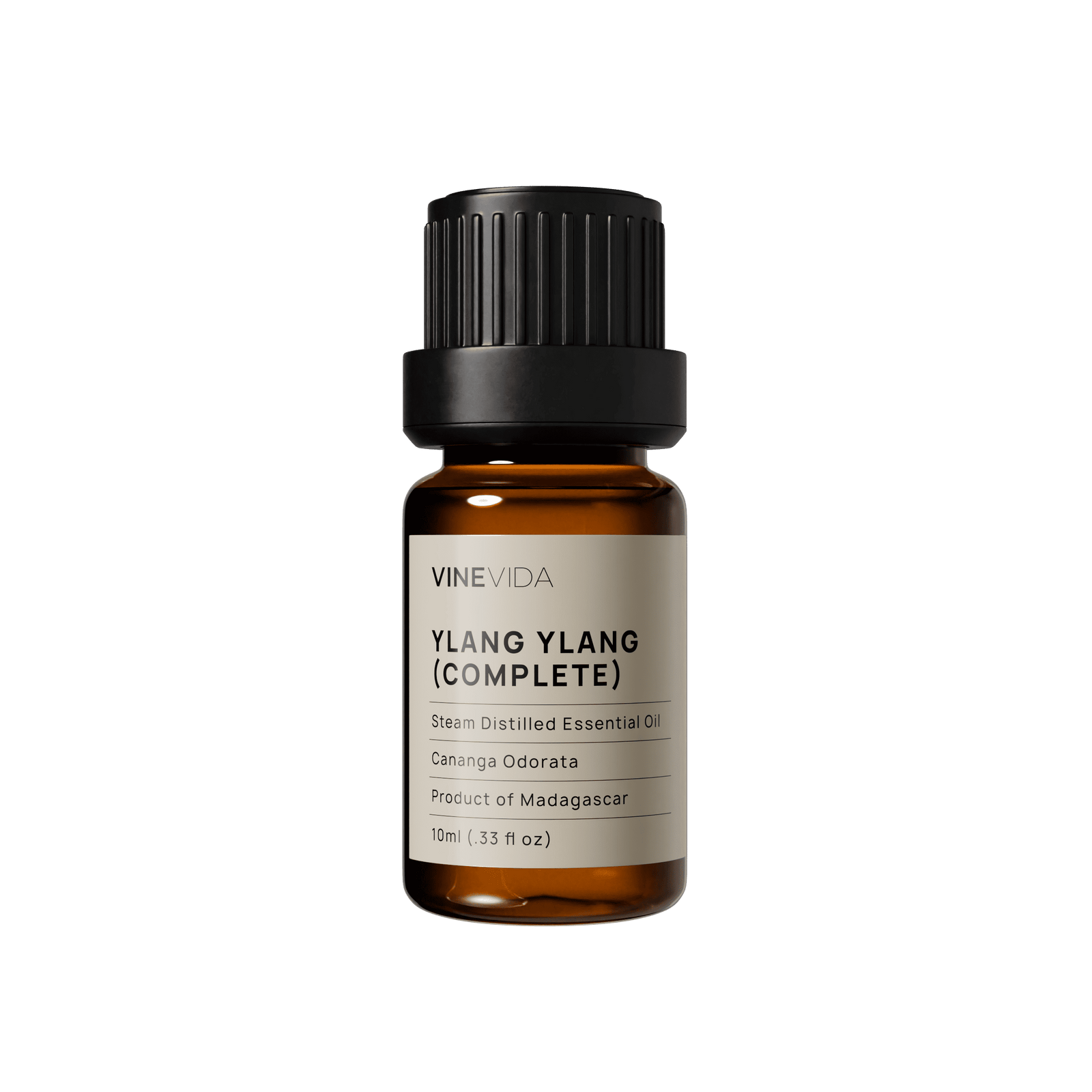
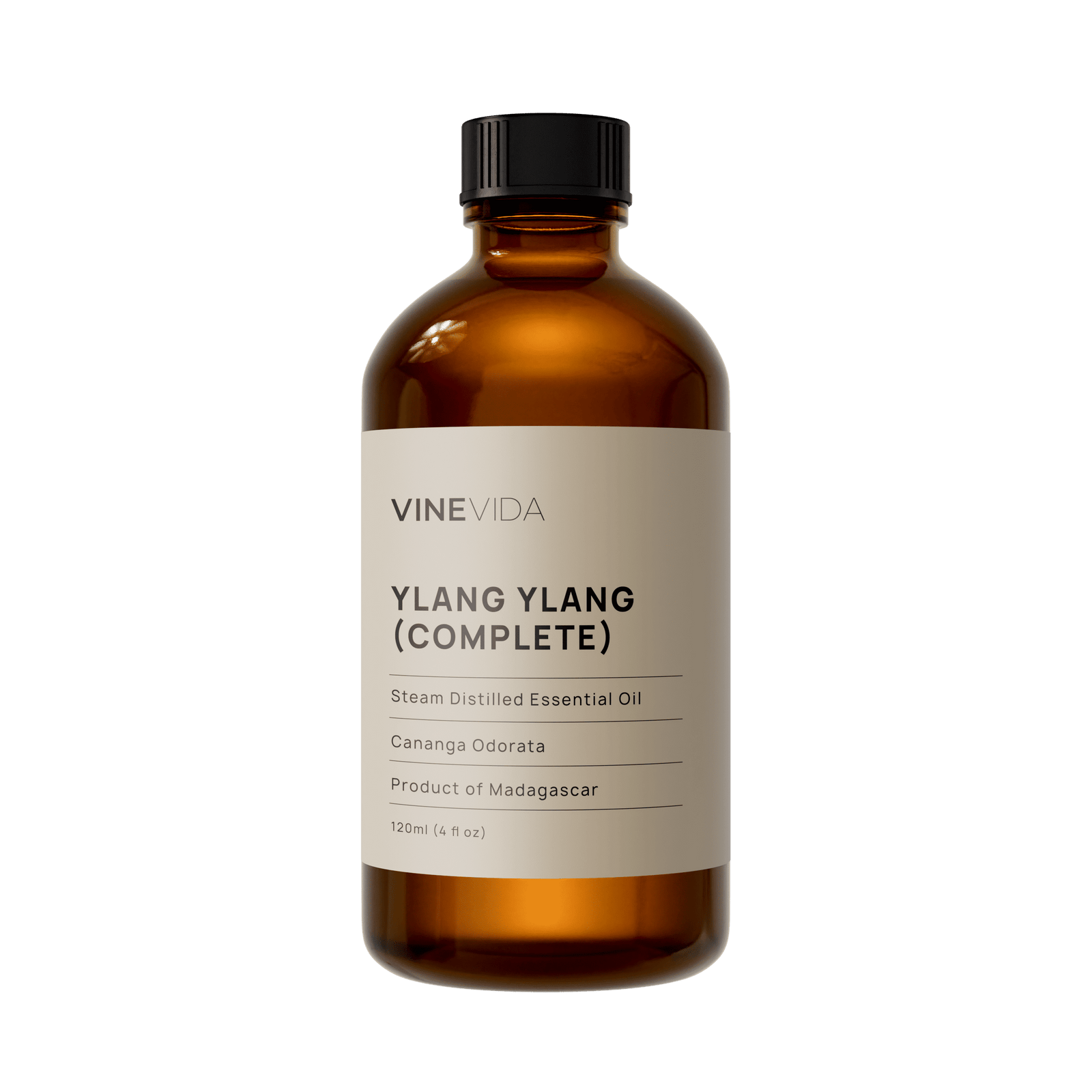





Ylang Ylang Essential Oil (Complete): Uses, Benefits, and Blends
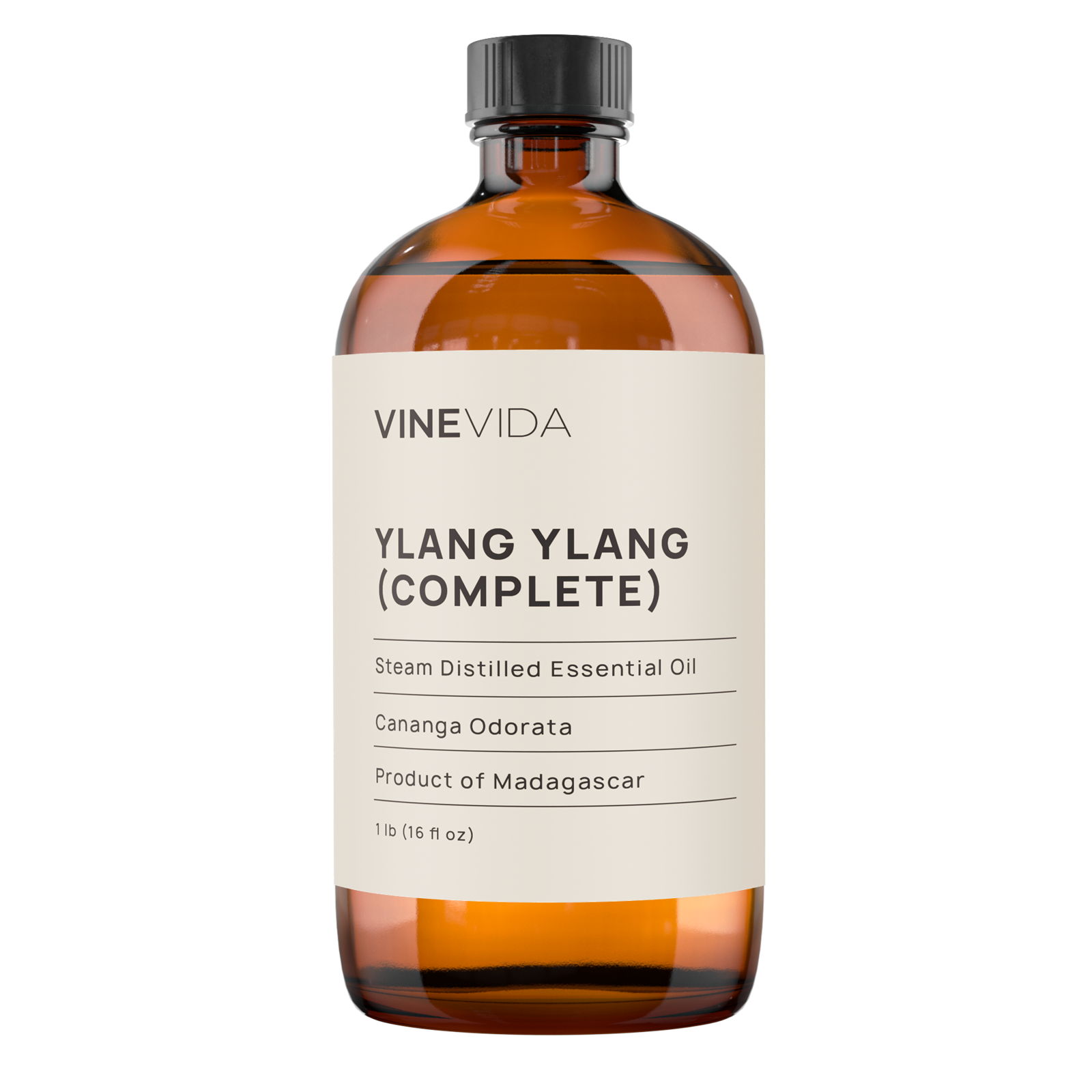
Scientific Name: Cananga Odorata
Origin: Madagascar
Plant Part: Flowers
Scent: Sweet and Heady
Color: Very slightly yellow
Consistency: Medium-thin
Perfumery Note: Middle
Initial Aroma Strength: Strongly sweet
Extraction Method: Fractional distillation
Suitable Blending Oils: Flowers, fruits, spices, resins, and woods. Ylang-ylang is gorgeous with rosy floral fragrances like Rose and Geranium, and although it's a grass, Palmarosa. Lemony fragrances work beautifully with Ylang-Ylang Essential Oil, so Lemongrass, Melissa, and all those delicious, fresh smells. Herbs like Lavender and Chamomile are gorgeous. Patchouli is stunning. My favorites, though, are woods like Cedarwood and Sandalwood and resins like deep Myrrh and rich Galbanum.
What is Ylang Ylang (Complete)?
We’ll get to the specifics of what ylang-ylang essential oil is and what it can do in a moment.
The name “Ylang ylang complete” refers to a version of how the oil has been produced. Ylang-ylang essential oil is produced via a process called fractional distillation. This means the steam distillation is stopped several times throughout the process, and fractions of the oil are taken off. Distillation moves oily molecules out of the plant via evaporation. But these so-called “volatiles” move at different rates, with the smallest ones leaving first and those with larger and heavier structures taking longer to get lifted out. So, the chemistry of the oil produced after one hour is different from that of three hours later. As such, these different chemical formulae will also smell and act differently. So the producer makes and sells several fractions, but then also takes a little of each and blends them back together to form “a complete.”
Ylang Ylang Extra vs Ylang Ylang Complete
Just as an overview. The first distillation is not very nice, so all that is achieved in the first hour is discarded. The fraction that is created in the next hour is called the “Extra”. This is the finest, and it is a collection of mainly alcohols and esters. The extra is hugely expensive and mostly sold to household-name perfumery houses.
Then we have Ylang Ylang I. This is stopped somewhere between one to three hours, and it is determined entirely by the skill and judgment of the distiller. All the way through, they are watching the consistency of the oil. When to stop is determined by the specific gravity of the oil, which is the weight of the oil when compared to water. Each distiller has their own opinion of when that should be, and so they have huge amounts of control over the beauty of the oil.
This extraction, Ylang Ylang 1, is thought to be the best from an aromatherapy point of view, for many reasons, but mainly because it is when the levels of linalool are the highest. Linalool is proven to be excellent as an anti-anxiety, antidepressant, and anti-inflammatory agent. Likewise, beta-caryophyllene often flourishes in this extraction, which has strong anti-pain, anti-inflammatory, and immune-supporting abilities.
The distillation is then stopped again at 3 hours and then at 6 hours and these fractions are sold for things like soapmaking, candle making, etc, where the quality of the oil does not need to be quite so good.
As stated, the producer will then bring together all of the parts, so there is a nice selection of all the available chemicals to create the “complete” or “the totale” as it is sometimes called.
Ylang Ylang Complete Essential Oil
Ylang-ylang essential oil (complete) is probably the one that smells most like the ylang-ylang flower. The fact that the sesquiterpenes have been added back in makes it feel heavier, fuller, and richer. This is, perhaps, the most sultry and enigmatic version.
Also Read: Best 8 Ways To Use Ylang Ylang Essential Oil
Breaking Down Ylang Ylang Complete Essential Oil’s Chemical Components
It’s interesting to see how that plays out in comparisons between the two...
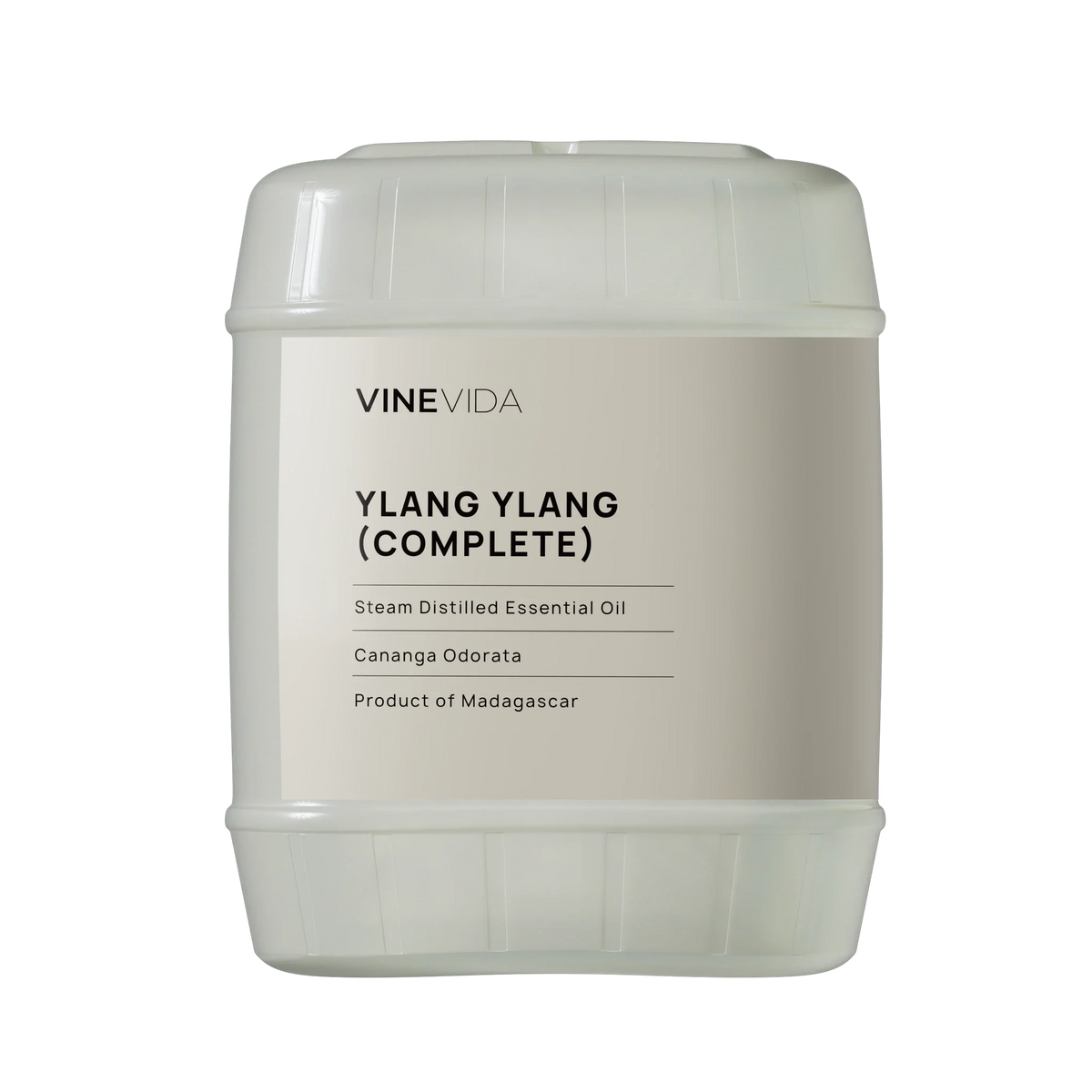
Perhaps more than most essential oils, the chemistry of each vat of ylang-ylang differs, so it makes sense to check the most current GC-MS to ensure the constituents haven't changed too much from the last time you bought it. Because of that, I’ve used sample details from Essential Oil Safety: A Guide for Health Care Professionals by Robert Tisserand and Rodney Young rather than our own batches, which will inevitably change over time. However, you can find links to the current documents just beneath the picture of our bottle of oil.
Ylang-Ylang Complete
-
- Germacrene D: 28.2%
- Benzyl benzoate: 9.1%
- (E, E)-α-Farnesene: 8.6%
- Benzyl acetate: 7.9%
- Linalool: 7.4%
- β-Caryophyllene: 7.1%
- Geranyl acetate: 3.7%
Tisserand, Robert; Young, Rodney. Essential Oil Safety: A Guide for Health Care Professionals (p. 1867). Elsevier Health Sciences. Kindle Edition.
Ylang Ylang I
-
- Linalool: 11.7–30.0%
- Benzyl benzoate: 4.3–14.9%
- Germacrene D: 0.1–13.5%
- β-Caryophyllene: 1.1–11.2%
Tisserand, Robert; Young, Rodney. Essential Oil Safety: A Guide for Health Care Professionals (p. 1868). Elsevier Health Sciences. Kindle Edition.
Germacrene Is The Main Constituent in ylang-ylang (Complete) Essential Oil.
Germacrene is predominantly an insect signaling molecule that the plant uses to attract pollinators. Potentially, this may be the secret to the aphrodisiac nature of the plant. It is fascinating to contemplate how the plant interacts with the outside world. Essential oils are, after all, bottled versions of these plant-pollinator conversations. You may have already pondered the marvel that plants can make chemicals to attract those they want and to deter more harmful ones. This is achieved by preferential odor receptors. Several species of moths have been identified as having preferential odor receptors for germacrene. That the plant specifically targets visitors that might visit at night is interesting, because ylang-ylang essential oil’s effects are drowsy, slow, and a bit dopey…just what you need to go to sleep. It’s almost as if the island sends the humans to Snoozy Ville!
Germacrene is also proven to have an anti-androgen property, which may be helpful for women with polycystic ovarian syndrome or who are suffering from hirsutism (Srivflai, 2016). Compare the levels of germacrene between Ylang Ylang Complete and Ylang Ylang I. While common parlance is to say YYI would be the better alternative for “therapy”, we do need to ask ourselves “what kind of therapy”, as Ylang Complete would perhaps be a better suggestion for PCOS due to the higher levels of germacrene.
Ylang Ylang (Complete) Essential Oil is Also Rich in Benzyl Benzoate
Doctors use Benzyl benzoate to treat lice and scabies infestations. (King, 1940) The lice and mites seem to absorb it to destroy their nervous system. It can be helpful for rosacea, because there is often a tiny mite, Demodex, underlying it. Demodex densities are vulnerable to benzyl benzoate. (Forton, 2022) It is also a powerful antifungal agent.
Farnesene in Ylang Ylang (Complete) Essential Oil
Farnesene has anti-inflammatory and antimicrobial properties and calming and sedative effects.
The Beauty of Benzyl Acetate in Ylang-Ylang (Complete) Essential Oil
Benzyl acetate is richly available in many flowers beloved by the perfumery industry, like jasmine, hyacinth, and gardenia. It lends a rich
 Safety Data Sheet
- Reviews
- Questions

 United States


You may also like
Recently viewed