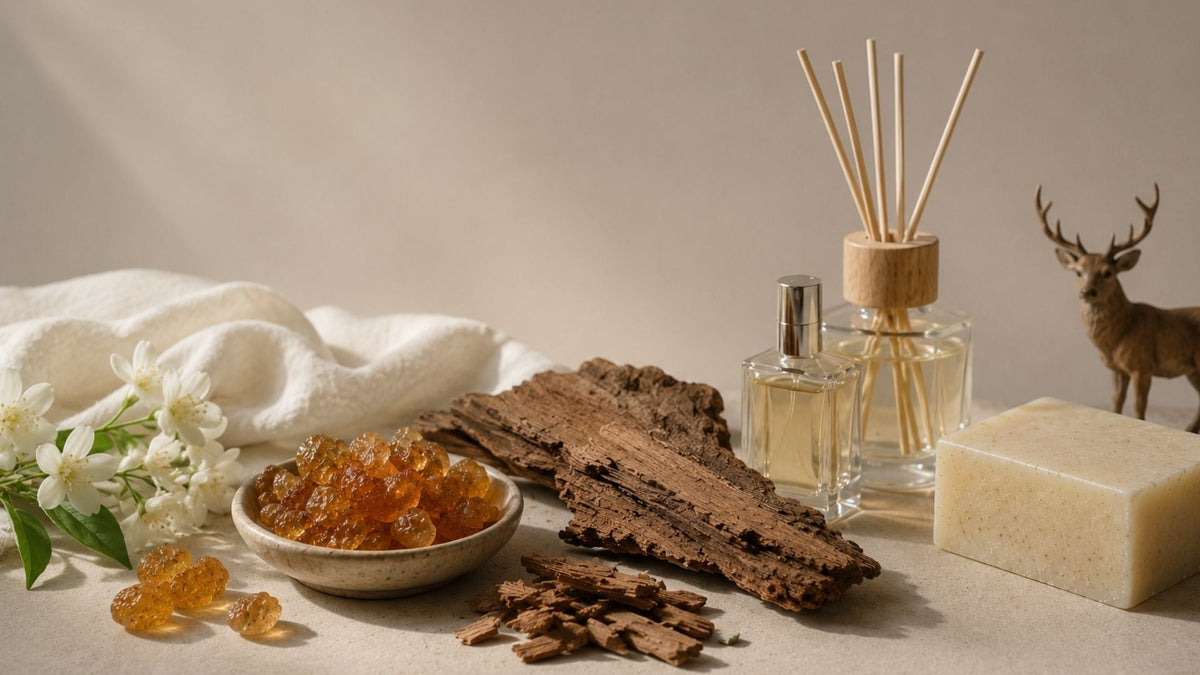
Musk does not have one fixed smell. It can remind you of clean laundry or warm skin, but it can also turn powdery, woody, creamy, sweet, or much deeper depending on the fragrance. That range is what makes musk familiar but surprisingly hard to describe.
Historically, musk came from musk deer, while modern perfumery mainly uses synthetic musk materials instead. This guide explains what musk smells like, where it came from, how modern forms such as white musk differ, and why musk is commonly used as a foundation in fragrance.
What Is Musk Scent?
Musk is a broad fragrance category rather than one single smell. Depending on which musk material a perfumer uses, it can smell clean, soft, powdery, warm, woody, sweet, or skin-like. The term originally referred to an aromatic material that perfumers obtained from musk deer, but modern perfumery now relies overwhelmingly on synthetic musk materials instead.
In a fragrance formula, musk usually sits in the base and helps hold the scent together. It can add warmth, softness, depth, and staying power without always standing out as an obvious note on its own. That supporting role is one reason musk appears so often across floral, woody, sweet, fresh, and skin-like fragrances.
What Does Musk Smell Like?
Musk can smell soft and powdery, warm and skin-like, clean and freshly laundered, or deeper and more sensual. Some versions have a creamy or woody quality, while others come across as airy, earthy, slightly sweet, or even faintly metallic. This is why there is no one smell that defines every musk fragrance.
|
Musk Style |
What It Can Smell Like |
|
Clean |
Fresh linen, soap, clean skin |
|
Airy |
Light, fresh, barely there |
|
Powdery |
Cosmetic powder, soft sweetness |
|
Skin-like |
Warm skin, subtle warmth |
|
Creamy |
Smooth, soft, rounded |
|
Warm |
Gentle sweetness, body warmth |
|
Woody |
Dry woods, sandalwood-like depth |
|
Animalic |
Richer, earthier, more sensual |
Fragrance references show just how broad that range can be. The Perfume Society describes synthetic musks as ranging from sweet and powdery to almost metallic, while Phlur also points to powdery, sweet, woody, earthy, floral, and fruity qualities.
Why Is Musk So Difficult to Describe?
Musk is difficult to describe because it does not have one fixed reference smell like rose, lemon, or vanilla. Different musk molecules smell different, and many sit close to the skin or underneath stronger notes instead of standing out on their own.
The rest of the fragrance also changes how musk comes across. Florals, woods, vanilla, citrus, and amber-style accords can make it feel cleaner, warmer, softer, or more powdery. Some people also struggle to detect certain musk materials at all. The Perfume Society notes that anosmia to some musk ingredients is fairly common.
Where Did Musk Originally Come From?
Natural musk came from male musk deer found across parts of Asia. The material formed in a specialized musk pod, and perfumers valued it because even a small amount had a strong scent and could help a fragrance last longer.
The demand for natural musk led to intensive hunting and trade, which put pressure on wild musk deer populations and raised major ethical concerns. As those problems became harder to ignore, perfumers turned to synthetic alternatives, which later became the standard source of musk effects in modern fragrance.
Is Musk Still Taken From Animals?
No, not in most modern perfumes. Perfumers now rely mainly on synthetic musk materials rather than musk taken from deer.
The change came largely from conservation and ethical concerns around animal-derived musk. Synthetic options also give perfumers a steadier supply and more control over the scent they want to create.
That said, “musk” on a label does not automatically mean the whole product is vegan or animal-free. Ingredients and sourcing vary between manufacturers, so check the brand’s product information if that matters to you.
What Is Synthetic Musk?
Synthetic musk is a group of fragrance materials made to create musky scent effects without using natural musk from deer. Chemists began developing these materials in the late 19th century, with the first synthetic musks appearing in 1888. Since then, perfumery has moved far beyond a single replacement for natural musk.
Modern perfumers can choose from many synthetic musk materials, each with its own odor and performance in a formula. One may give a fragrance a cleaner or softer finish, while another may add warmth, sweetness, depth, or a skin-like quality. This variety lets perfumers choose the musk that fits the fragrance instead of relying on one standard musk scent.
What Is White Musk?
White musk is a clean, soft style of modern musk fragrance. It often smells like fresh laundry, clean skin, light powder, soft sweetness, and airy fabric rather than anything dark or strongly animalic.
The term does not mean natural musk that happens to be white, and it does not refer to one specific ingredient. Perfumers use different synthetic musk materials to create the white musk effect, which is why one white musk fragrance may smell more soapy while another feels powdery, creamy, or closer to skin.
Clean Musk vs Warm Musk
Clean musk smells fresh, airy, soapy, and close to clean skin, while warm musk smells creamier, woodier, sweeter, and more skin-like. These are not strict scientific categories, but they are useful terms for describing two common musk styles.
|
Feature |
Clean Musk |
Warm Musk |
|
Main impression |
Fresh, airy, soft |
Warm, creamy, deeper |
|
Common associations |
Fresh linen, clean skin, soap |
Skin warmth, woods, soft sweetness |
|
Supporting notes |
Soft florals, citrus, powder |
Vanilla, woods, amber-style accords |
|
Overall feel |
Light and fresh |
Fuller and more sensual |
Clean Musk
Clean musk leans toward fresh linen, clean skin, soap, powder, and soft florals. Citrus and light floral notes can make this style feel even fresher and more airy.
Warm Musk
Warm musk leans toward skin warmth, creaminess, woods, vanilla, and amber-like accords. It usually feels fuller and deeper than clean musk, but it does not have to smell heavy.
Why Does Musk Sometimes Smell Powdery?
Musk can smell powdery because some musk materials naturally have a soft, cosmetic-like quality. Notes such as iris, violet, vanilla, and other soft florals can make that powdery effect more noticeable.
Not every musk smells this way. A musk fragrance built around woods, citrus, or cleaner notes may come across as fresh, warm, or skin-like instead of powdery.
Why Does Musk Sometimes Smell Like Clean Laundry?
Musk can smell like clean laundry because many modern white-musk-style materials have a fresh, soft, fabric-like character. They can also carry soapy or clean-skin qualities, which is why musk often appears in perfumes, personal-care products, and other scents built around a freshly washed effect.
That modern use has changed what many people expect musk to smell like. Today, musk is often associated more with clean fabric and fresh skin than with the deeper, animalic character of its historical form.
Why Does Musk Sometimes Smell Like Skin?
Musk can smell skin-like because some musk materials have a soft, warm character that stays close to the wearer. Instead of standing out as a separate note, musk often blends with the rest of the fragrance and creates a subtle, intimate effect.
“Skin-like” does not mean musk smells exactly like human skin. In fragrance, the term usually describes a scent that feels natural and low-key, often with help from soft woods, light florals, or amber-style notes.
Is Musk a Fragrance Note or a Fragrance Family?
Musk can be listed as a fragrance note, but the term also describes a broader musky scent character. In perfumery, the word can refer to several different things:
-
Historical raw material: The natural musk once obtained from musk deer.
-
Modern aroma materials: The synthetic musk materials perfumers use today.
-
Fragrance note: Musk listed as part of a perfume’s composition.
-
Olfactory character: A fragrance described as musky because of its overall smell.
This is why “musk” does not always mean one specific ingredient. A perfume may list musk as a note, while terms such as floral musk or woody musk describe the broader character of the fragrance.
Why Is Musk Used in Perfume?
Musk is used in perfume to help the fragrance last longer, bring different notes together, and add softness, warmth, and depth. It can also give the base a subtle skin-like quality without overpowering the rest of the scent.
Musk Adds Softness
Musk can soften sharper notes and make transitions between different parts of a fragrance feel smoother.
Musk Adds Warmth
Some musk materials add a warm, skin-like quality that makes a fragrance feel softer as it settles.
Musk Adds Depth
Musk can give a fragrance more body and make the overall composition feel fuller.
Musk Supports Other Notes
Musk works well with florals, woods, vanilla, fruit, spices, and amber-style accords. It often helps these notes sit together without taking over the fragrance.
Musk Helps a Fragrance Last
Many musk materials remain noticeable after lighter notes fade. This is why perfumers often use musk in the base, where it can add persistence and help the fragrance keep its character for longer.
Is Musk a Base Note?
Yes, musk is commonly used as a base note because many musk materials last longer than lighter fragrance notes. As top and middle notes fade, musk can remain noticeable and help shape the scent during the drydown.
A base note is the part of a fragrance that develops later and tends to stay on the skin longer. Musk works well in this role, but that does not mean every musky fragrance dries down the same way. Clean white musk may stay soft and airy, while musk paired with vanilla, woods, or amber-style accords can feel warmer and richer.
What Scents Pair Well With Musk?
Musk pairs well with florals, vanilla, woods, amber-style accords, citrus, and gourmand notes. Each pairing brings out a different side of musk, from clean and airy to warm, creamy, or rich.
Musk + Floral Notes
Rose, jasmine, violet, and orange blossom can soften musk and give it a more floral, skin-like character. Many Floral Fragrance Oils use these notes in similar combinations.
Musk + Vanilla
Vanilla brings out musk’s creamy, warm, and slightly sweet side, a pairing also common across Sweet Fragrance Oils.
Musk + Woods
Sandalwood, cedarwood, and vetiver can make musk feel drier, creamier, or more grounded. These combinations also appear frequently in Spicy & Woody Fragrance Oils.
Musk + Amber-Style Accords
Amber-style accords make musk feel warmer, richer, and deeper without changing it into an amber scent.
Musk + Citrus
Citrus brightens clean musk and can make the fragrance feel fresher and more airy.
Musk + Gourmand Notes
Musk can soften vanilla, chocolate, caramel, and other edible-style notes, giving gourmand scents a smoother finish without becoming the main sweet note.
Musk vs Amber: What's the Difference?
Musk is usually softer, cleaner, and more skin-like, while amber tends to smell warmer, sweeter, richer, and more resinous or vanilla-like. Both often appear in the base of a fragrance, but they create different effects.
Musk can bring softness, powderiness, clean-skin warmth, or intimacy. Amber usually adds more richness and sweetness, depending on how the amber accord is built. Perfumers often use the two together, but musk and amber are not interchangeable.
Musk vs Oud: What's the Difference?
Musk is usually soft, skin-like, clean, warm, or sometimes animalic, while oud has a much more distinctly woody character. Oud can also smell smoky, earthy, leathery, or resinous depending on the material or accord.
Both can add depth to a fragrance, and perfumers often combine them. Musk can soften the heavier side of oud, while oud gives a musky composition more woody richness.
Why Can Musk Smell Different From One Fragrance to Another?
Musk smells different from one fragrance to another because perfumers use different musk materials, different amounts, and different supporting notes. The overall structure of the fragrance also changes how the musk comes across, and people do not always perceive the same musk materials with equal strength.
A clean musk built around citrus, soft florals, or fresh accords may smell airy or laundry-like. Musk paired with vanilla, woods, or amber-style accords can feel warmer, creamier, deeper, or more sensual. Even the amount of musk in the formula can shift how noticeable those effects become.
That is why the word “musk” alone does not tell you exactly how a fragrance will smell. The full scent profile matters more, whether you are comparing musky perfume scents, musky scents for women, or other musk-based fragrance styles.
How to Recognize Musk in a Fragrance
Musk is usually easier to recognize after the opening notes have faded. Give the fragrance time to settle before deciding what the musk smells like.
-
Smell the opening first. Notice the brighter top notes without judging the musk yet.
-
Let those brighter notes settle. Citrus, fruit, herbs, and other top notes can dominate the first few minutes.
-
Pay attention to what remains underneath. Musk often becomes easier to notice as the fragrance moves into the drydown.
-
Look for musky qualities. These may include clean, powdery, warm, creamy, woody, airy, or skin-like effects.
-
Compare different musk styles. Smell a clean musk next to a warmer or woodier musk to make the contrast easier to notice.
-
Keep individual perception in mind. You may detect some musk materials much more strongly than others.
Musk does not always stand out as a separate note, so recognizing it often comes down to noticing what remains after the brighter parts of the fragrance fade.
Common Musk Myths
Musk is often misunderstood because the term covers both historical and modern fragrance ideas. A few common myths include:
-
“Musk always comes from animals.” Natural musk has an animal-derived history, but modern perfumery relies mainly on synthetic musk materials.
-
“Musk always smells dirty or animalic.” Many modern musks smell clean, soft, powdery, or similar to fresh laundry and clean skin.
-
“White musk is one specific ingredient.” White musk usually describes a clean, soft musk style created with different synthetic musk materials.
-
“All musk smells the same.” Different musk materials smell different, and the rest of the fragrance can change how they come across.
-
“Musk is only used in men’s fragrance.” Musk appears in men’s, women’s, and unisex fragrances across floral, woody, sweet, and fresh scent styles.
-
“Musk is always heavy.” Some musks are rich, but others are light, airy, subtle, and close to the skin.
-
“Musk and amber are the same.” Musk usually leans softer, cleaner, or more skin-like, while amber tends to feel richer, sweeter, and more resinous or vanilla-like.
Conclusion
Musk is not one single smell. It can range from clean and powdery to warm, woody, skin-like, sweet, or more animalic depending on the materials and fragrance around it. That range is why musk works across so many different scent styles.
Natural musk historically came from musk deer, but modern perfumery relies mainly on synthetic musk materials. Understanding white musk, clean musk, warm musk, and musk’s role in the fragrance base makes musky scents easier to recognize, and VINEVIDA offers a range of musky fragrance oils for comparing different musk profiles.
Frequently Asked Questions
What is musk scent?
Musk scent is a broad fragrance category rather than one single smell. It can smell clean, powdery, warm, woody, sweet, creamy, or skin-like, and it often appears in the base of a fragrance.
What does musk smell like?
Musk can smell soft, warm, clean, powdery, creamy, woody, earthy, or slightly sweet. Some modern musks also have airy, laundry-like, fruity, or almost metallic qualities.
Does musk still come from animals?
No, not in most modern perfumes. Perfumers now rely mainly on synthetic musk materials, although sourcing can vary, so a product labeled “musk” should not automatically be assumed to be vegan or animal-free.
What is white musk?
White musk is a clean, soft style of modern synthetic musk rather than one specific ingredient. It often smells like fresh linen, clean skin, powder, soft soap, or light sweetness.
Why can’t I smell musk in some perfumes?
Some people have difficulty detecting certain musk materials. The Perfume Society notes that anosmia to some musk ingredients is fairly common, and the amount of musk or the notes around it can also make it harder to notice.