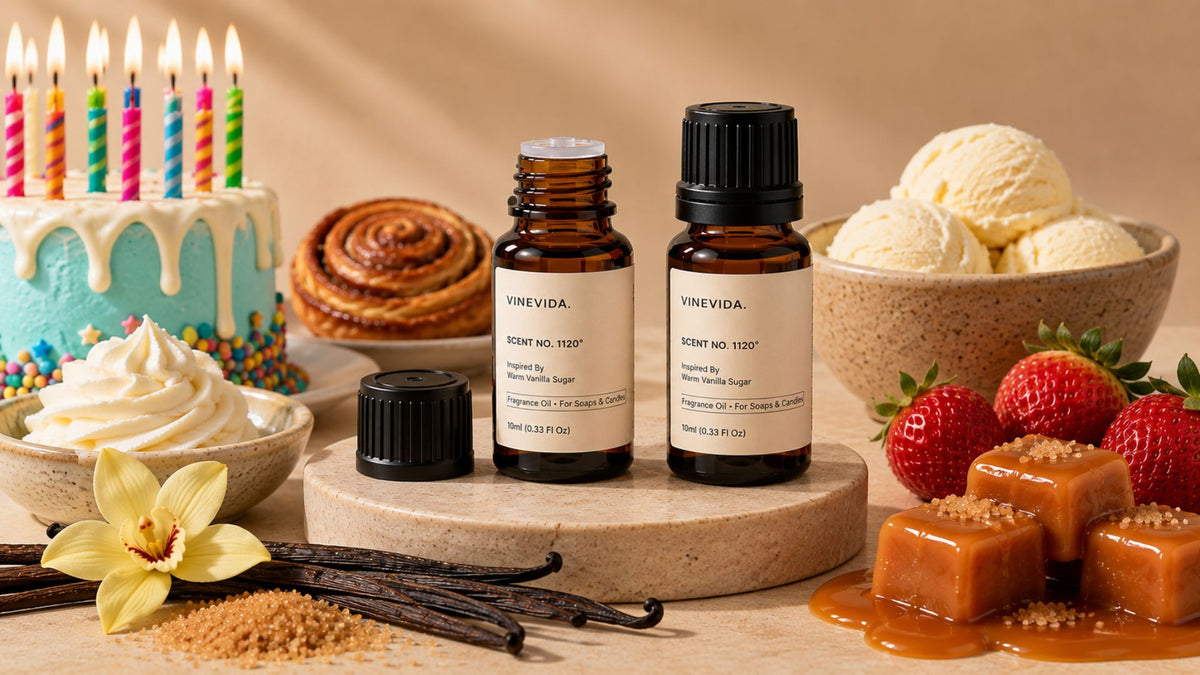
Sweet fragrance oils are built around sugary, creamy, syrupy, or dessert-inspired scent profiles such as vanilla, caramel, chocolate, marshmallow, and cake. Their familiar, comforting character and wide range of scent styles help explain their lasting appeal, from soft and creamy fragrances to rich, playful, or indulgent gourmands.
Not every sweet fragrance is a gourmand. Fruity and floral scents can have noticeable sweetness, while gourmand fragrances are specifically inspired by foods, desserts, confectionery, beverages, and other edible-smelling accords. These sweet fragrance oils are used across candles, soaps, perfumes, body care, and home fragrance, depending on the suitability of the individual fragrance for the intended application.
This catalog explores the main gourmand fragrance families, popular sweet notes, complementary blends, seasonal and mood directions, and practical considerations for choosing the right sweet fragrance oil.
What Are Sweet Fragrance Oils?
Sweet fragrance oils are fragrance formulations with a noticeably sweet scent profile, ranging from vanilla and honey to richer dessert-inspired scents. The table below shows how sweet fragrances, gourmand fragrances, and essential oils differ.
|
Term |
What It Means |
Typical Examples |
|
Sweet Fragrance |
Broad sweet-smelling profile |
Vanilla, honey, fruit-sweet accords |
|
Gourmand Fragrance |
Food-, dessert-, confectionery-, or beverage-inspired scent profile |
Caramel, chocolate, cake, coffee |
|
Essential Oil |
Volatile aromatic material derived from botanical sources |
Orange, peppermint, lavender |
Understanding the Sweet Fragrance Family
Gourmand fragrances are commonly recognized by food-, dessert-, and beverage-inspired scent characteristics. For practical comparison, they can be grouped into vanilla, bakery, chocolate, candy, caramel, honey, creamy, dessert-inspired, and beverage-inspired profiles, and many fragrances combine in more than one direction.

|
Gourmand Category |
Typical Character |
Common Examples |
|
Vanilla |
Soft, creamy, warm, and sweet |
Vanilla bean, vanilla cream |
|
Bakery |
Baked, buttery, and doughy |
Cookie, cake, donut |
|
Chocolate |
Cocoa-rich, creamy, or bittersweet |
Milk chocolate, cocoa, chocolate fudge |
|
Candy |
Sugary and confectionery-inspired |
Cotton candy, marshmallow, candy accords |
|
Caramel |
Rich, buttery, and cooked-sugar-like |
Caramel, toffee, caramelized sugar |
|
Honey |
Golden, nectar-like, and syrupy |
Honey, honeycomb-style accords |
|
Creamy |
Milky, smooth, and soft |
Milk, cream, coconut cream |
|
Dessert-Inspired |
Layered and reminiscent of finished desserts |
Praline, buttercream, pastries |
|
Beverage-Inspired |
Sweet or roasted drink-inspired |
Coffee, mocha, sweet beverage accords |
Popular Sweet Fragrance Notes
Sweet fragrance notes do not all create the same kind of sweetness. Vanilla and milk can feel soft and creamy, while caramel, brown sugar, and toffee lean darker and more cooked. Coffee adds a roasted edge, and notes such as cotton candy or marshmallow move in a lighter, more playful direction.
The names below describe the scent impression a fragrance oil is designed to suggest. They do not necessarily mean the fragrance contains the named food or botanical ingredient, and the final character can vary considerably from one formulation to another.
Vanilla
Vanilla is one of the most flexible gourmand notes. It can smell creamy and soft, but some fragrances lean more buttery, woody, powdery, or slightly smoky rather than simply sugary.
Common pairings: Sandalwood, amber, coffee, chocolate, coconut, fruit, florals, and spice.
Best applications: Perfume, candles, soap, body care, and home fragrance.
Caramel
Caramel has a deeper cooked-sugar character than many softer sweet notes. Some versions feel creamy and buttery, while others have a darker toasted quality that can make the fragrance seem richer.
Common pairings: Coffee, vanilla, apple, chocolate, nutty accords, amber, and woods.
Best applications: Candles, perfume, soap, and warm home fragrance.
Honey
Honey tends to sit on the softer side of gourmand sweetness. Depending on the fragrance, it may feel nectar-like and floral or take on slightly waxy and syrupy nuances.
Common pairings: Oatmeal, vanilla, milk, almond, florals, citrus, and soft woods.
Best applications: Soap, body care, perfume, candles, and home fragrance.
Marshmallow
Marshmallow usually feels light and airy rather than heavily caramelized. Its sweetness often suggests vanilla, powdered sugar, or a whipped texture, which can make it useful in both playful and softer gourmand blends.
Common pairings: Vanilla, amber, berries, chocolate, coffee, caramel, and woods.
Best applications: Perfume, body care, candles, soap, and playful gourmand blends.
Chocolate
Chocolate can move from creamy milk-chocolate styles to darker, cocoa-rich profiles. That range matters when blending: a softer chocolate can reinforce sweetness, while a more bittersweet version can provide contrast.
Common pairings: Vanilla, coffee, mint, orange, cherry, caramel, praline, and spice.
Best applications: Candles, soap, perfume, and dessert-inspired home fragrance.
Brown Sugar
Brown sugar is warm and caramelized, with more depth than a simple sugar accord. Molasses-like or toasted nuances can give some versions a noticeably darker edge.
Common pairings: Fig, vanilla, coffee, apple, maple, cinnamon-style spice, amber, and woods.
Best applications: Candles, soap, perfume, and autumn-inspired blends.
Maple Syrup
Maple syrup fragrances tend to be rich, syrupy, and immediately recognizable. Their cooked-sugar character often pushes them toward breakfast, bakery, autumn, or holiday scent directions.
Common pairings: Vanilla, coffee, brown sugar, apple, cinnamon-style spice, nutty accords, and woods.
Best applications: Candles, soap, and autumn, holiday, or bakery-inspired home fragrance.
Cotton Candy
Cotton candy has a lighter spun-sugar sweetness than dense caramel or chocolate notes. Fruity or vanilla nuances can make it feel even brighter and more playful.
Common pairings: Berries, citrus, vanilla, marshmallow, musk, and other candy-style notes.
Best applications: Perfume, candles, soap, and playful fragrance collections.
Buttercream
Buttercream combines sweetness with a creamy, buttery frosting character. Compared with plain vanilla, it usually feels fuller and more obviously dessert-inspired.
Common pairings: Cake, berries, chocolate, caramel, coconut, coffee, and citrus.
Best applications: Candles, soap, and bakery or celebration-inspired scents.
Cookie
Cookie fragrances often recreate the impression of baked dough, butter, sugar, and vanilla rather than sweetness alone. Chocolate, spice, or nutty notes can make the profile feel more specific and less like a general bakery accord.
Common pairings: Chocolate, caramel, brown sugar, coffee, cinnamon-style spice, milk, and nutty accords.
Best applications: Candles, soap, and cozy bakery-style home fragrance.
Cake
Cake fragrances usually combine sweetness with buttery baked notes and some form of vanilla or frosting character. Some stay fairly simple and creamy, while others feel richer and more layered.
Common pairings: Buttercream, berries, chocolate, lemon, coconut, caramel, and vanilla.
Best applications: Candles, soap, and dessert or celebration-inspired scents.
Donut
Donut fragrances tend to have more dough and fried-bakery character than cake or candy scents. Sugar, vanilla glaze, cinnamon, or chocolate can push the profile in very different directions.
Common pairings: Coffee, maple, chocolate, caramel, berries, vanilla, and brown sugar.
Best applications: Candles, soap, and bakery or breakfast-inspired home fragrance.
Toffee
Toffee has a deeper caramelized-sugar character with buttery, toasted, and sometimes lightly nutty notes. It generally feels darker and richer than standard caramel.
Common pairings: Coffee, chocolate, vanilla, apple, amber, woods, and nutty accords.
Best applications: Candles, perfume, soap, and autumn or winter gourmand blends.
Praline
Praline combines sweetness with a creamy, caramelized, nutty character. That nut-like richness gives it more complexity than a straightforward vanilla or sugar note.
Common pairings: Vanilla, chocolate, coffee, caramel, amber, woods, and soft florals.
Best applications: Perfume, candles, body care, and rich gourmand blends.
Coffee
Coffee stands apart from many gourmand notes because its roasted and slightly bitter character can counterbalance sweetness. It works especially well when caramel, vanilla, or chocolate needs a darker edge.
Common pairings: Caramel, vanilla, chocolate, cream, maple, nutty accords, and woods.
Best applications: Candles, perfume, soap, and home fragrance.
Milk
Milk accords are usually soft, creamy, and gently sweet rather than overtly sugary. They can smooth out richer gourmand notes and give a blend a more rounded character.
Common pairings: Vanilla, honey, coffee, chocolate, almond, coconut, and soft musk.
Best applications: Perfume, body care, soap, and creamy gourmand blends.
Coconut Cream
Coconut cream takes the familiar tropical character of coconut in a softer, milkier direction. It tends to feel richer than a fresh coconut profile and can move easily between tropical and gourmand styles.
Common pairings: Vanilla, pineapple, citrus, chocolate, caramel, florals, sandalwood, and amber.
Best applications: Body care, perfume, soap, candles, and summer-inspired gourmand blends.
Sweet Fragrance Families at a Glance
Sweet fragrance notes can differ in how sugary, creamy, or rich they smell. This quick comparison highlights their general scent character and where each style commonly works well.
|
Fragrance Note |
Sweetness |
Richness |
Best Uses |
|
Vanilla |
High |
Medium–High |
Perfume, candles, body care |
|
Caramel |
High |
High |
Candles, warm blends, perfume |
|
Honey |
Medium–High |
Medium |
Soap, body care, warm blends |
|
Marshmallow |
High |
Medium |
Perfume, candles, playful gourmands |
|
Chocolate |
Medium–High |
High |
Candles, soap, dessert blends |
|
Brown Sugar |
High |
High |
Candles, soap, autumn blends |
|
Maple Syrup |
High |
High |
Autumn, holiday, bakery scents |
|
Cotton Candy |
Very High |
Light–Medium |
Perfume, candles, playful scents |
|
Buttercream |
High |
High |
Bakery and celebration scents |
|
Cookie |
Medium–High |
High |
Candles, soap, cozy home fragrance |
|
Cake |
High |
High |
Candles, soap, dessert blends |
|
Donut |
High |
High |
Candles, soap, bakery scents |
|
Toffee |
High |
High |
Candles, perfume, autumn blends |
|
Praline |
High |
High |
Perfume, candles, body care |
|
Coffee |
Medium |
High |
Candles, perfume, home fragrance |
|
Milk |
Medium |
Medium |
Perfume, body care, creamy blends |
|
Coconut Cream |
High |
Medium–High |
Body care, perfume, summer scents |
Sweetness and richness are general scent impressions and can vary from one fragrance formulation to another. Fragrance longevity also depends on factors such as the individual formula, concentration, product base, and application.
Choosing Sweet Fragrance Oils by Application
The right sweet fragrance profile depends partly on the product you are making. Consider how light, creamy, rich, or balanced you want the scent to feel, while also confirming that the individual fragrance oil is suitable for its intended application.
Candles
Sweet candle fragrances often suit warm, full-bodied profiles such as vanilla, caramel, coffee, chocolate, and bakery-inspired scents. Lighter gourmands can create a softer atmosphere, while richer profiles work well for cozy or dessert-inspired candles. Fragrance Oils for Candles covers more detailed selection and testing considerations for candle making.
Soap
For soap, look for sweet fragrances with a clear scent character that complements the finished bar. Vanilla, honey, coconut, coffee, and bakery-inspired profiles can suit a range of soap styles, while Fragrance Oils for Soap provides more application-specific guidance on choosing and testing a fragrance.
Perfume
Gourmand perfumes often benefit from balancing sweetness with contrasting scent notes. Vanilla, caramel, praline, coffee, and marshmallow profiles may be combined with woods, amber, musk, fruit, florals, or spice to create more depth. Fragrance Oils for Perfume covers the considerations involved in choosing fragrance for personal scent.
Body Butter & Lotion
Softer, creamier gourmand profiles such as vanilla, coconut cream, honey, milk, and praline can complement the rich character of body butter and lotion. Because these are leave-on products, the individual fragrance must be suitable for the intended cosmetic application, as discussed further in Fragrance Oils for Body Butter.
Diffusers
Sweet diffuser fragrances should suit both the room and the atmosphere you want to create. Vanilla, coffee, coconut, amber-gourmand, and lighter bakery profiles can add warmth, while richer caramel, chocolate, or candy scents may feel heavier in smaller spaces. Fragrance Oils for Diffusers covers the application-specific factors involved in choosing fragrance for home scenting.
Popular Gourmand Fragrance Blends
Gourmand blends often work by combining sweetness with a note that adds contrast, warmth, freshness, or depth. These pairings show how different notes can shape the overall scent without overwhelming the gourmand character.
|
Blend |
Why It Works |
|
Vanilla + Sandalwood |
Sandalwood adds smooth, woody warmth that balances vanilla's creamy sweetness. |
|
Honey + Oatmeal |
Oatmeal adds a soft, grain-like character that makes honey feel gentler and more comforting. |
|
Caramel + Coffee |
Roasted coffee brings a darker, slightly bitter contrast to rich caramel. |
|
Chocolate + Mint |
Cool, fresh mint cuts through the richness of chocolate and creates a cleaner contrast. |
|
Brown Sugar + Fig |
Fig adds deep fruity notes that complement the warm, caramelized character of brown sugar. |
|
Coconut + Vanilla |
Vanilla strengthens coconut's creamy side and gives the blend a softer, fuller sweetness. |
|
Marshmallow + Amber |
Warm amber adds depth to marshmallow's light, airy sweetness. |
|
Maple + Bourbon |
Bourbon-style notes bring woody, warm depth that balances maple's syrupy sweetness. |
These pairings are starting points rather than fixed formulas. When blending fragrance oils, make small test blends, record the ratios, and confirm that each fragrance is suitable for the intended application before using the blend in a finished product.
Choosing Sweet Fragrances by Season
Seasonal fragrance choices often come down to how light or rich the sweetness feels. Brighter fruits, florals, and citrus can keep gourmand notes fresh in warmer months, while caramelized sugars, spice, amber, woods, and deeper dessert notes create a fuller character for cooler seasons.
Spring
Spring gourmands usually work best when the sweetness feels soft and airy. Vanilla, honey, marshmallow, and milk can be paired with pear, berries, citrus, delicate florals, or green notes for a fresher scent that still keeps a gentle gourmand character.
Summer
Summer favors sweet profiles with a brighter or more tropical edge. Coconut cream, vanilla, and light candy-inspired notes pair naturally with pineapple, citrus, tropical fruit, airy musk, and soft florals, helping the fragrance feel less dense in warm-weather collections. Summer Fragrance Oils can also provide broader inspiration for fresh, tropical, fruity, and lightly sweet seasonal scent directions.
Autumn
Autumn is well suited to deeper, toasted sweetness. Caramel, brown sugar, maple, coffee, and toffee gain warmth from apple, fig, cinnamon-style spice, amber, and woods, creating the cozy character often associated with Autumn Fragrance Oils.
Winter
Winter can carry richer gourmand combinations such as chocolate, praline, cookie, marshmallow, coffee, and vanilla. Pairing them with warm spice, amber, mint, woods, or resinous notes creates greater depth and also fits naturally with Holiday Fragrance Oils and Christmas Fragrance Oils.
Seasonal Gourmand Fragrance Guide
|
Season |
Sweet Notes to Explore |
Complementary Notes |
Overall Character |
|
Spring |
Vanilla, honey, marshmallow, milk |
Pear, berries, citrus, florals |
Soft, fresh |
|
Summer |
Coconut cream, vanilla, light candy notes |
Tropical fruit, citrus, airy musk |
Bright, tropical |
|
Autumn |
Caramel, brown sugar, maple, coffee, toffee |
Apple, fig, spice, amber, woods |
Warm, toasted |
|
Winter |
Chocolate, praline, cookie, marshmallow, vanilla |
Spice, amber, mint, woods |
Rich, deep |
Choosing Sweet Fragrances by Mood
Sweet fragrances can create very different impressions depending on the notes around them. Some combinations feel soft and comforting, while others lean warm, playful, rich, or romantic.
Sweet Fragrance Finder
|
Mood |
Sweet Notes to Explore |
Complementary Notes |
|
Comforting |
Vanilla, milk, honey, marshmallow |
Oatmeal, soft woods, musk |
|
Warm |
Caramel, brown sugar, maple |
Amber, sandalwood, spice |
|
Luxurious |
Praline, toffee, vanilla, coffee |
Amber, woods, florals |
|
Playful |
Cotton candy, donut, buttercream |
Berries, citrus, marshmallow |
|
Cozy |
Cookie, cake, coffee, vanilla |
Cinnamon-style spice, woods |
|
Indulgent |
Chocolate, caramel, praline |
Coffee, vanilla, nutty accords |
|
Romantic |
Vanilla, marshmallow, coconut cream |
Amber, musk, rose-style florals |
Choosing the Right Sweet Fragrance Oil
Choosing the right sweet fragrance oil starts with matching the scent style to the product, season, and overall fragrance direction you want to create.
-
Intended application: Start with the product you are making and confirm that the individual fragrance oil is suitable for that use.
-
Desired sweetness level: Decide whether you want soft, creamy sweetness or a stronger candy, caramel, or dessert-like profile.
-
Season: Lighter or fruitier gourmands can suit warmer seasons, while richer caramelized, spiced, or woody profiles often fit cooler months.
-
Target audience: Consider whether the scent should feel familiar, playful, refined, cozy, or indulgent for the people you want it to appeal to.
-
Single-note vs. blended fragrance: Choose whether one recognizable sweet note should stand out or several notes should create a more layered scent.
-
Complementary fragrance families: Fruit, florals, and citrus can brighten sweetness, while spice, woods, amber, and musk can add warmth or depth.
Once you have narrowed the scent direction, compare individual fragrance oils based on their intended applications and current product information.
Common Mistakes When Choosing Sweet Fragrances
Sweet fragrances can be rich, soft, playful, or cozy, but the right choice depends on more than sweetness alone. Strength, balance, setting, and the finished product all affect how the scent comes across.
-
Choosing a fragrance that is too sweet: Very sugary notes can overpower the rest of the scent. Coffee, citrus, spice, fruit, amber, or woods can add balance.
-
Ignoring fragrance strength: Sweetness and intensity are not the same. Two fragrances with similar notes can smell very different in strength.
-
Using heavy gourmand scents in small spaces: Rich chocolate, coffee, caramel, and bakery scents can feel overwhelming when used too strongly in a smaller room.
-
Overlooking the season: Supporting notes can change the overall feel of a gourmand. Citrus and coconut can make it brighter, while spice, amber, and woods can make it warmer.
-
Skipping sample testing: A fragrance may smell different once it is used in wax, soap, perfume, body care, or another finished product. Testing a small amount first gives you a better idea of the final result.
-
Assuming all vanilla fragrances smell the same: Vanilla can be creamy, sugary, woody, powdery, buttery, smoky, or amber-like depending on the full fragrance profile.
Conclusion
Sweet fragrance oils range from soft vanilla and creamy notes to richer caramel, chocolate, coffee, candy, and bakery-inspired gourmands. The right choice depends on the product you are making, the audience you want to appeal to, and the overall scent experience you want to create.
Supporting notes can also change how sweet a fragrance feels, adding freshness, warmth, depth, or contrast to the main gourmand profile. VINEVIDA’s Fragrance Oils include a range of sweet and gourmand scent directions, giving you a useful starting point for comparing profiles and finding one that suits your project or signature scent.
Frequently Asked Questions
What are sweet fragrance oils?
Sweet fragrance oils are fragrance formulations with sugary, creamy, syrupy, or dessert-like scent profiles. Common examples include vanilla, caramel, honey, marshmallow, chocolate, praline, cake, and coffee, although sweet fragrances may also include fruity, floral, woody, or amber notes.
What is a gourmand fragrance?
A gourmand fragrance is a scent inspired by food, desserts, confectionery, or beverages. Vanilla, caramel, chocolate, coffee, cookie, praline, and marshmallow are common gourmand notes, often combined with woods, fruit, florals, amber, musk, or spice for added contrast and depth.
Can sweet fragrance oils be blended?
Yes. Sweet fragrance oils can be blended when each fragrance is suitable for the intended application. Pairings such as vanilla and sandalwood, caramel and coffee, chocolate and mint, or marshmallow and amber can create different gourmand styles. Start with a small measured blend and test it in the finished product before making a larger batch.
Are sweet fragrance oils suitable for perfume?
Some sweet fragrance oils are suitable for perfume, but not all are intended for personal fragrance. Check the product information and current supplier documentation for the individual oil before use. Gourmand perfumes often feature notes such as vanilla, praline, coffee, caramel, marshmallow, coconut, amber, musk, fruit, or woods.
Which sweet fragrances work best in candles?
Vanilla, caramel, coffee, chocolate, cookie, cake, maple, brown sugar, and other bakery-inspired scents are common choices for gourmand candles. The scent profile alone does not determine candle performance, so choose a fragrance intended for candle making and test it with your specific wax, wick, vessel, and fragrance load.