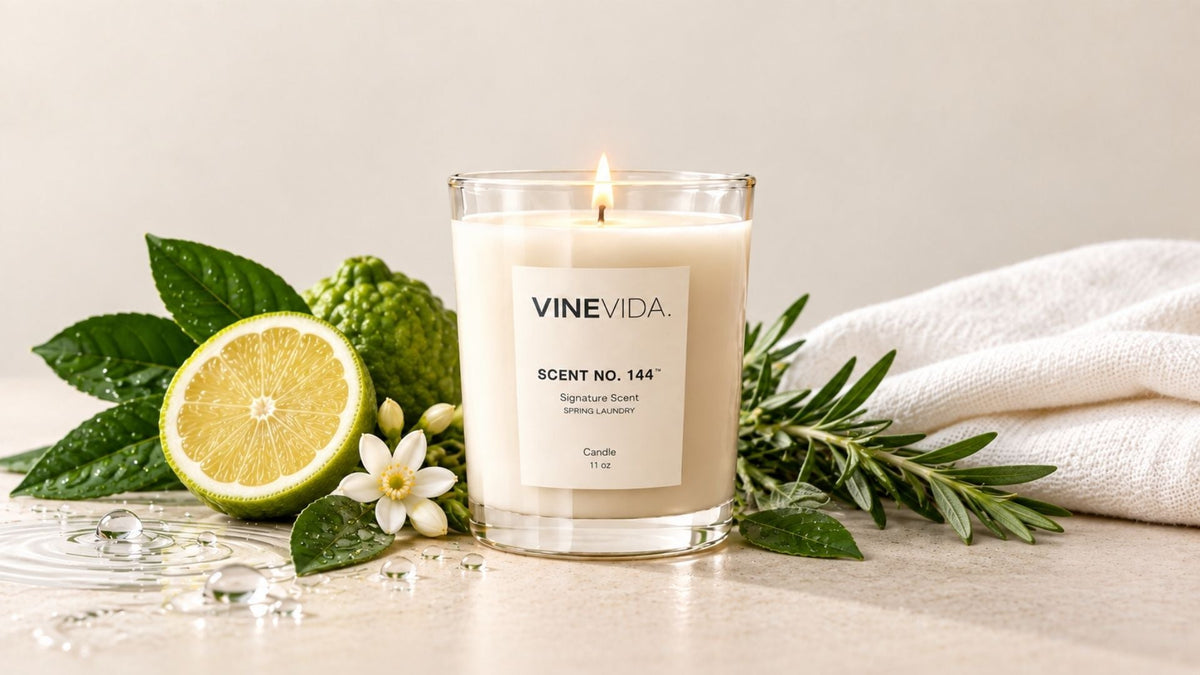
Fresh candle scents can create a bright, clean or airy impression in the home, which makes them an easy fit for everyday home fragrance. But “fresh” does not describe one particular smell. One candle may suggest crisp sheets, while another brings to mind ocean air, citrus peel, green leaves, rain, herbs or delicate flowers.
Freshness also does not have to mean soap or laundry detergent. Woods, musk and light florals can balance brighter fresh notes, giving citrus, aquatic, green or herbal fragrances more depth and a more polished character.
This guide covers the main types of fresh candle scents, the fragrance notes commonly used to create them, and the differences between clean, aquatic, citrus and green profiles. You will also learn which fresh scent directions suit different rooms and how to choose between airy, crisp, spa-like and more sophisticated fresh candles.
What Are Fresh Candle Scents?
Fresh candle scents are fragrance profiles that can feel crisp, airy, clean, watery, green, bright or breezy, depending on the composition. Freshness may come from citrus, ozone, aquatic accords, green notes, linen-style accords, herbs, musk, light florals or soft woods.
That means a fresh candle does not have to smell like laundry or soap. WoodWick's Fresh & Clean category shows how varied the style can be, with fragrances that combine fresh elements such as citrus, green notes and ocean-inspired accords with florals, musk and woods
The Main Types of Fresh Candle Scents
Fresh candle scents fall into several broad styles, and each creates freshness in a different way. Some lean toward clean fabric or water, while others get their fresh character from citrus, greenery, herbs, flowers or woods.
Clean Linen & Laundry Scents
 Clean linen and laundry scents bring to mind fresh sheets, clean cotton, soft fabric and laundry air. Musk, white florals, ozone, soft woods and powdery accords often support that familiar clean effect.
A fragrance such as NO. 34 Fresh Linen Fragrance Oil fits naturally into this style because its overall direction centers on that fresh, fabric-like impression. This type of scent is a natural fit if you specifically want a “clean house” smell. If laundry or detergent associations are not your preference, citrus, green and aquatic styles offer other ways to create freshness.
Aquatic & Coastal Scents
 Aquatic and coastal candle scents create freshness through watery, airy and mineral impressions rather than through a laundry-like effect. Sea salt, ocean air, ozone, citrus, neroli and driftwood-style notes are common ways to build that kind of profile.
NO. 131 Blooming Ocean Fragrance Oil takes that direction in a more layered way. Eucalyptus, lemon, ocean air and pine give the opening a cool, radiant character, while jasmine, rose geranium, musk and driftwood add softness and depth underneath.
Citrus Fresh Scents
 Citrus candle scents use notes such as lemon, bergamot, grapefruit, orange and mandarin to create a bright, zesty and clean-smelling impression.
They are a good choice when you want obvious freshness without a laundry effect. NO. 1810 Inspired by Grapefruit by Jo Malone Fragrance Oil follows that direction with grapefruit, lime and mandarin at the top, giving the profile a bright citrus opening with a fresh, zesty character.
Green Fresh Scents
 Green candle scents bring to mind leaves, grass, stems, tea, herbs and clover. They tend to feel crisp and botanical, though some blends can also have a slightly earthy side.
WoodWick’s Fresh & Clean collection includes verdant clover with sandalwood. VINEVIDA NO. 223 Tomato Leaf Fragrance Oil is another example, with tomato leaf, green herbs, bergamot, lemon and pear over a softer base of balsam and musk.
Herbal & Spa Fresh Scents
 Eucalyptus, rosemary, lavender, sage and mint can give a candle an aromatic, botanical and spa-like character. NO. 171 Day At The Spa Fragrance Oil sits comfortably in this territory, with eucalyptus, green leaves and peppermint alongside citrus, florals, tea, amber and wood.
Stronger eucalyptus or mint profiles can smell medicinal to some people, so those softer supporting notes can help keep the overall scent more balanced.
Fresh Floral Scents
 Fresh floral candle scents use notes such as white florals, neroli, lily, peony and lavender without making the overall fragrance feel especially rich or heavy. Rose can also work in this fresher direction when the profile stays light rather than dense or overly sweet.
NO. 33 Fresh Cut Roses Fragrance Oil is a straightforward example of that style, bringing a clean floral character that fits naturally within the fresh-floral category. Pairing florals with citrus, musk or other fresh notes can make the overall scent feel even airier and more polished.
Fresh Woody Scents
 Fresh woody scents pair brighter elements with woods to create freshness with more depth. Common combinations include citrus with cedarwood, sea salt with driftwood, bergamot with teak, and green notes with sandalwood.
These combinations tend to feel more grounded and less detergent-like than a traditional clean-linen profile. NO. 1810 Inspired by Grapefruit by Jo Malone Fragrance Oil brings a similar fresh-and-grounded character through grapefruit, lime and mandarin over oakmoss, patchouli and vetiver. Cedarwood can add a drier woody character, while sandalwood generally brings a smoother, warmer impression.
Fresh vs Clean Candle Scents
Fresh is a broader scent direction, while clean usually refers to fragrances associated with laundry, linen, soap, fresh cotton, clean skin or soft musk.
|
Fresh candle scents |
Clean candle scents |
|
Can be citrus, aquatic, green, herbal, breezy or floral |
Often suggest linen, laundry, cotton, soap or clean skin |
|
May feel botanical, coastal or bright |
Often feel fabric-like, soft or freshly washed |
|
Do not need a laundry character |
Usually have a more recognizable “clean house” association |
Fresh fragrances can therefore move well beyond laundry-inspired scents. Citrus, rain, coastal, green and herbal profiles can all create freshness without smelling like freshly washed fabric, which is why a clean candle scent is often fresh, but a fresh candle scent does not have to smell like laundry.
Goose Creek's Fresh & Clean collection reflects that wider range, with profiles that extend beyond cotton and linen into other fresh scent directions.
Fresh vs Aquatic Candle Scents
Aquatic is one route to freshness, not another word for fresh. Aquatic candle scents usually evoke water, sea air, rain or mineral freshness through notes and effects such as sea salt, ozone, marine accords, water lily and mineral notes.
A citrus or green candle can still smell fresh without feeling watery or marine. If you associate freshness with ocean air, rain or mist, an aquatic profile may suit you; if you prefer citrus peel, herbs or green leaves, another fresh scent direction may be a better fit.
Fresh vs Fruity Candle Scents
Fresh and fruity candle scents can overlap, but they emphasize different characteristics. Fresh scents usually focus on crispness, airiness and brightness, while fruity scents place more emphasis on recognizable notes such as apple, peach, berries, melon or tropical fruits.
Some fruity candles can still feel fresh. Grapefruit with mint, melon with watery notes, or apple with green leaves can create both effects. A richer berry fragrance with sugar, vanilla or syrupy notes, however, may smell distinctly fruity without having the same crisp or airy character.
Fresh Candle Scents That Don't Smell Like Laundry
If you want freshness without the smell of cotton, detergent or freshly washed sheets, look toward citrus, green, tea, aquatic-herbal and fresh woody combinations.
Good options include:
-
Bergamot + Cedarwood
-
Sea Salt + Sage
-
Grapefruit + Vetiver
-
Green Tea + Woods
-
Eucalyptus + Lavender
-
Citrus + Herbs
-
Neroli + Driftwood
The supporting notes can shift the character considerably. Cedarwood and vetiver can make a fresh scent feel drier and more grounded, tea can give it a quieter botanical quality, while sea salt or neroli can move it toward a lighter coastal direction.
Fresh Candle Scents That Don't Smell Too Masculine
Aquatic and woody fragrances are sometimes marketed with a traditionally masculine character, but scent notes themselves are not inherently gendered. If you prefer a softer fresh profile, look for combinations that bring in florals, citrus, tea or musk.
Good options include:
-
Peony + Musk
-
Neroli + Citrus
-
Lavender + Bergamot
-
White Florals + Ozone
-
Green Tea + Soft Woods
-
Citrus + Florals
Supporting notes can significantly change the overall impression. Drier woods or peppery accents may make a fresh scent feel sharper or more structured, while neroli, peony, soft musk or lighter florals can make it feel softer and more rounded. The most useful approach is to judge the fragrance by its full scent profile rather than the gender label used in its marketing.
Fresh Candle Scents That Smell Luxurious
A fresh candle can feel luxurious without being heavy, sweet or highly perfumed. The effect often comes from pairing a bright fresh note with a softer floral, musk or woody base that adds depth without overpowering the composition.
Good combinations include:
-
Bergamot + Woods: Bright and polished, with cedarwood or sandalwood adding structure.
-
Neroli + Sea Salt: Fresh, citrus-floral and refined with a coastal character.
-
Green Tea + Cedarwood: Clean and botanical without leaning toward a laundry scent.
-
White Floral + Musk: Soft, airy and polished.
-
Sage + Ocean Minerals: Fresh and modern with an aromatic edge.
-
Citrus + Sandalwood: Bright at first, with a smoother and warmer base.
Luxury freshness often comes from contrast: a crisp or bright opening balanced by restrained florals, musk or woods.
Fresh Candle Scents by Room
Different rooms can suit different styles of freshness. Citrus, herbs and green notes can feel especially fitting in brighter, more active spaces, while lavender, musk, tea and softer florals can create a gentler fresh impression in bedrooms and other quieter areas.
 Room function can also influence how noticeable or restrained a candle scent feels. A kitchen may benefit from a crisp, uncomplicated profile, while an entryway can handle a clearer first impression and an office may suit something fresh but more subdued.
Fresh Candle Scents for the Living Room
For the living room, fresh scents usually work well when they balance brightness with a little floral, woody or musky depth. This helps the fragrance feel polished rather than strongly reminiscent of laundry or bathroom products.
Good combinations include:
-
Bergamot + Cedarwood
-
Green Tea + Woods
-
Neroli + Sea Salt
-
Sage + Citrus
-
White Floral + Musk
These combinations keep the overall profile fresh while giving it enough character for a shared living space.
Fresh Candle Scents for the Kitchen
Citrus, tea and herbal fragrances are natural choices for the kitchen because they tend to feel bright and fresh without adding the same sweet or dessert-like character as heavier gourmand scents.
Good options include:
-
Lemon
-
Grapefruit
-
Bergamot
-
Green Tea
-
Fresh Herbs
-
Citrus + Herbs
A fresh candle can add a cleaner-smelling fragrance to the room, but it does not remove the source of cooking odors. Ventilation, cleaning and removing the odor source should come first.
Fresh Candle Scents for the Bathroom
Bathrooms are one place where stronger clean associations can feel especially appropriate. Fresh scents can lean toward crisp, airy or spa-like profiles without needing much sweetness or warmth.
Good options include:
-
Eucalyptus
-
Linen
-
Sea Salt
-
Rain-Inspired Scents
-
Citrus
-
Fresh Herbs
A candle can make the room smell fresher, but it does not sanitize or disinfect the bathroom.
Fresh Candle Scents for the Entryway
The entryway helps shape the first scent impression of a home, so fresh fragrances that feel bright but balanced are a good fit.
Strong options include:
-
Bergamot + Cedar
-
Sea Salt + Neroli
-
Citrus + Green Notes
-
White Floral + Musk
-
Sage + Woods
The goal is a scent that feels noticeably fresh without immediately suggesting cleaning products. Pairing brighter notes with soft woods, musk or florals can create a more polished and welcoming effect.
Fresh Candle Scents for an Office
For an office, fresh scents usually work best when they feel clean and restrained rather than sharp, overly sweet or heavy.
Suitable directions include:
-
Green Tea
-
Bergamot
-
Cedarwood
-
Light Citrus
-
Sage
-
Soft Musk
Green tea, bergamot and sage can keep the profile bright and fresh, while cedarwood or soft musk can add depth without making the fragrance feel too rich.
How Fresh Candle Fragrances Are Built
Fresh candle fragrances are usually compositions rather than single-note scents. Citrus, green or airy notes can provide brightness, while herbs, florals, musk and woods add character and depth.
Top-Like Freshness
Brighter elements often include:
-
Citrus
-
Ozone
-
Light Green Notes
These help create the crisp or airy side of the fragrance.
Middle Character
The middle of the composition may include:
-
Lavender
-
Neroli
-
Tea
-
Sage
-
White Florals
These notes can shift the fragrance toward a more herbal, floral or botanical direction.
Base Structure
Fresh fragrances may be grounded with:
-
Musk
-
Cedarwood
-
Sandalwood
-
Driftwood-Style Accords
These supporting notes add depth without necessarily taking away the fresh character.
WoodWick's Sagewood & Seagrass shows this kind of layering in practice, combining crisp citrus with white sage and ocean minerals over cedarwood and sheer musk.
Why Some Fresh Candles Smell Like Cleaning Products
Some fresh candles can drift into a cleaning-product smell when sharper notes dominate the fragrance. Lemon, eucalyptus, mint and ozone are common examples, especially when they are paired with strong linen or aldehydic effects.
That reaction also depends on the person smelling it. A bright lemon note might come across as crisp and refreshing to one person but remind someone else of household cleaner. If you tend to notice that association, look for fresh scents softened with woods, musk, tea, florals, sea salt or gentler herbs. They can keep the fragrance fresh without making the sharper notes feel quite so prominent.
Why Some Fresh Candles Smell Too Soapy
Some fresh candles lean noticeably soapy when linen accords, white musk, powdery notes, aldehydic clean effects or certain white florals are prominent. That character is common in clean-cotton and laundry-inspired fragrances, but it may not be what you had in mind when looking for something simply described as fresh.
If you prefer to avoid that effect, look toward green, aquatic, citrus or fresh woody scents instead. Checking the fragrance notes can also tell you more than the name on the candle, since words such as “fresh” or “clean” can cover very different scent styles.
Can a Fresh Candle Still Smell Warm?
Yes. A fresh candle can still have a warm side. Bright, airy or watery notes can be paired with woods, musk, vanilla-style florals or soft amber notes without losing the overall sense of freshness.
Combinations to consider include:
-
Bergamot + Sandalwood
-
Sea Salt + Vanilla Blossom
-
Citrus + Cedarwood
-
Green Tea + Soft Amber
-
Neroli + Musk
These pairings keep some of the brightness associated with fresh scents while adding a softer or warmer base. WoodWick's Vanilla & Sea Salt offers a similar contrast, combining sea salt and cool melon with vanilla orchid, blonde woods and musk, although WoodWick classifies the fragrance itself as Floral.
Fresh Candle Scents for Every Season
Fresh candle scents can work throughout the year, but different notes can shift the mood with the season.
-
Spring: Green notes, rain-inspired accords, light florals and citrus.
-
Summer: Aquatic, coastal, citrus and herbal scents.
-
Autumn: Fresh woods, green fig, or bergamot paired with cedarwood.
-
Winter: Fir with citrus, eucalyptus, or clean woody profiles.
Season can help narrow the options, but it does not have to dictate what you burn. If you enjoy a particular fresh scent, there is no reason to reserve it for only one part of the year.
Which Fresh Candle Scent Should You Choose?
Start with the kind of freshness you want your home to have.
|
I want my home to smell... |
Start with |
|
Freshly cleaned |
Linen, cotton, soft musk |
|
Fresh but not soapy |
Citrus, green notes, tea |
|
Spa-like |
Eucalyptus, lavender, sage |
|
Coastal |
Sea salt, ozone, neroli, driftwood |
|
Sophisticated |
Bergamot, cedarwood, green tea, musk |
|
Fresh but warm |
Citrus + woods, neroli + musk |
|
Botanical |
Green notes, herbs, tea |
|
Fresh but not like laundry |
Citrus, tea, aquatic-herbal, fresh woods |
The supporting notes matter too. A bergamot candle, for example, may also include florals, woods, musk, herbs or warmer notes, and those additions can change whether the overall scent feels crisp, soft, woody or warm.
What Makes a Fresh Candle Smell Strong or Weak?
A citrus or aquatic candle is not automatically weaker than a woody or richer fragrance. How strong the finished candle smells depends on the fragrance formula, wax, wick, vessel, fragrance load, cure time and the size of the room where it is burned.
Because of that, hot and cold throw in Candle Fragrance Oils is better judged through actual candle performance than by scent family alone. Two fresh fragrances can still vary quite a bit in how noticeable they are.
Conclusion
Fresh candle scents can be clean, aquatic, citrus, green, herbal, floral or woody. Freshness is broader than the smell of clean laundry, so you do not need to choose linen, cotton or soap-style fragrances simply because you want a room to feel fresh.
Citrus and aquatic compositions provide brighter interpretations, while tea, herbs and green notes create more botanical freshness. Adding musk, florals or woods can give fresh candle scents more depth and warmth without losing their airy character. How strongly the finished candle performs should be considered separately from its fragrance family.
Ultimately, the best fresh candle depends on what fresh means to you: clean sheets, sea air, rain, citrus peel, green leaves, spa aromatics, delicate flowers or polished woods. If you are creating your own candle, explore VINEVIDA's Candle Fragrance Oils collection once you have narrowed down the scent direction you want.
Frequently Asked Questions
What are fresh candle scents?
Fresh candle scents create an impression that feels crisp, airy, clean, watery, green or bright. That freshness can come from citrus, aquatic accords, herbs, tea, green notes, light florals, musk or woods, so the category extends well beyond laundry-style scents.
What is the difference between fresh and clean candle scents?
Fresh is the broader scent direction. Clean fragrances tend to bring to mind linen, cotton, soap, fresh fabric or soft musk, while fresh scents may also be citrusy, aquatic, green, herbal, floral or woody. A clean candle scent is often fresh, but a fresh scent does not have to smell like laundry.
What fresh candle scents don't smell like laundry?
Try combinations such as bergamot with cedarwood, grapefruit with vetiver, sea salt with sage, green tea with woods or neroli with driftwood-style notes. These keep a fresh character without relying heavily on cotton, linen or detergent-like accords.
What candle scents make a house smell fresh?
It depends on what kind of freshness you prefer. Linen and soft musk give a freshly washed impression, while citrus, green tea, herbs, eucalyptus and sea salt can make the scent feel brighter, greener, spa-like or more coastal.
Why does my fresh candle smell like cleaning products?
Sharp lemon, eucalyptus, mint, ozone or strong linen effects can remind some people of household cleaners. If that association bothers you, look for fresh fragrances balanced with tea, woods, musk, florals, sea salt or softer herbs.