
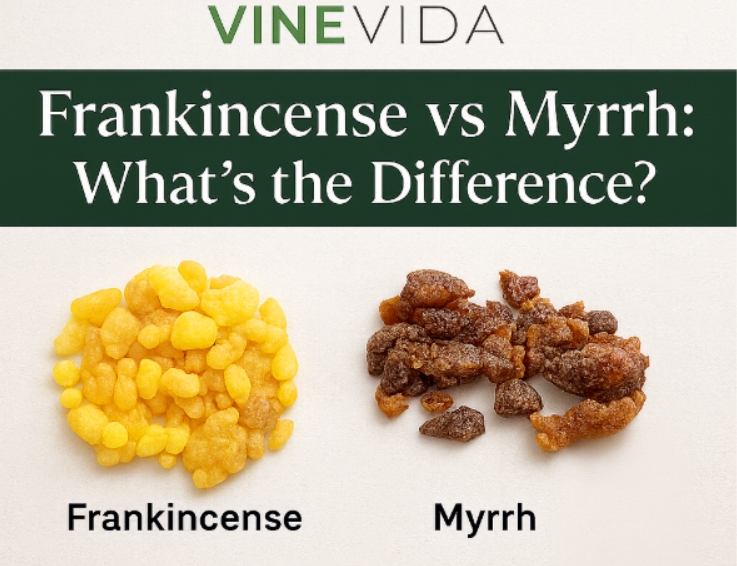
Frankincense vs Myrrh: What’s the Difference & Which Should You Use?
Meta Description: Learn what sets Frankincense vs Myrrh apart by comparing their benefits, uses, aromas, and spiritual meaning to determine which oil best supports your wellness goals.

Understanding ancient aromatic oils can feel overwhelming, especially when two of the most celebrated—Frankincense vs Myrrh—often appear side by side in discussions about wellness, spirituality, and natural healing. Despite their similarities, each resin offers distinct benefits, scents, and practical uses. Today, these oils are still highly valued for their grounding aromas, emotional balancing properties, and versatility in everyday routines.
As interest in holistic wellness continues to rise, people are revisiting traditional botanicals to support relaxation, mindfulness, and seasonal wellness. Below is a detailed guide that breaks down the key differences between the two oils while helping you understand when and how to use each based on your needs.
What Are Frankincense and Myrrh?
Frankincense and Myrrh are two of the oldest aromatic resins in human history, valued for their rich scents, cultural significance, and diverse wellness applications. Both originate from hardy desert trees that produce sap, which hardens into resin and is then steam-distilled into essential oils. Though often mentioned together, they offer distinct aromatic profiles, emotional effects, and traditional uses that make each one uniquely beneficial.
Frankincense Overview

Frankincense is derived from the Boswellia tree, prized for its warm, slightly citrusy aroma and uplifting qualities. Historically used in ceremonies, meditation, and skin-nourishing blends, Frankincense Essential Oil remains one of the most popular options for emotional grounding and overall wellness.
Benefits of Frankincense:
-
-
Emotional and Mindful Support
-
Frankincense is often chosen for mindfulness, reflection, and emotional grounding. Its comforting aroma promotes clarity and calm, making it ideal for meditation, journaling, breathwork, yoga, or quiet moments of pause.
-
-
Winter Wellness
-
Many people explore how to use frankincense in winter because its warm, soothing fragrance helps create a sense of comfort during the colder months. When diffused, it blends beautifully with woods, spices, and bright citrus oils to elevate seasonal aromatherapy routines.
-
-
Skin-Nourishing Properties
-
Frankincense is a popular choice in natural skincare due to its gentle, balancing qualities. Many incorporate it into serums, creams, or facial oils to support a calm, even-looking complexion and promote a sense of restoration.
Key highlights:
-
-
Helps create a grounding, reflective atmosphere
-
Supports mindfulness and emotional well-being
-
Complements winter aromatherapy beautifully
-
Frequently used in natural beauty and wellness rituals
-
Myrrh Overview

Myrrh comes from the Commiphora tree and features a deeper, smokier, resinous scent. Often associated with cleansing rituals and protective traditions, Myrrh Essential Oil provides a calming, earthy tone ideal for grounding and introspective practices.
Benefits of Myrrh:
-
-
Deep, Grounding Aromatic Profile
-
Myrrh’s heavy, resinous aroma encourages stillness and contemplation. Many use it to support emotional grounding or during quiet moments that require focus and connection.
-
-
Spiritual and Cleansing Practices
-
Historically used in sacred ceremonies, purification rituals, and traditional medicine systems, Myrrh continues to symbolize resilience, protection, and spiritual presence. Its aroma is often used to create a sense of sanctuary.
-
-
Complementary Blending Oil
-
When combined with bright oils like citrus or aromatic woods, Myrrh adds richness and depth.
Key highlights:
-
-
Encourages a calm, introspective environment
-
Supports spiritual, meditative, and reflective practices
-
Ideal for adding aromatic depth and warmth to blends
-
For more guidelines on the historical and cultural significance of aromatic resins, visit the Smithsonian Magazine guide on ancient aromatics.
Frankincense vs Myrrh: Side‑by‑Side Comparison
Below is an enhanced comparison chart that highlights the benefits of frankincense vs myrrh so you can easily determine which oil aligns with your wellness needs.
|
Feature |
Frankincense |
Myrrh |
|---|---|---|
|
Aroma |
Bright, resinous, citrusy |
Earthy, smoky, grounding |
|
Consistency |
Light to medium |
Thick and sticky |
|
Best For |
Meditation, winter blends, calming routines |
Spiritual blends, grounding practices |
|
Common Use |
Diffusers, skin-safe blends, seasonal rituals |
Grounding diffusions, wellness blends |
Frankincense and Myrrh each offer distinct aromas and benefits. Choosing between them depends on the kind of support or experience you want in your wellness routine.
Spiritual and Seasonal Significance

Frankincense and Myrrh have been used in rituals, ceremonies, and cultures for centuries. Their spiritual symbolism also makes them central to many spiritual oils comparison discussions within aromatherapy.
Why They’re Popular in Winter
-
Long‑standing association with reflection and tradition
-
Warm, resinous aromas pair well with seasonal spices
-
Their grounding qualities enhance quiet moments during colder months
Whether used alone or blended, these time-honored aromatics continue to offer a meaningful presence in seasonal and wellness practices around the world.
Finding the Right Essential Oil for Your Needs

Deciding between Frankincense and Myrrh often comes down to the type of experience or support you’re seeking. Each resin offers its own unique aromatic personality and emotional influence.
When Frankincense Is the Better Choice
Choose Frankincense if you’re looking for:
-
-
A bright, uplifting aroma with grounding qualities
-
Support for meditation, breathwork, or mindful routines
-
A comforting addition to wintertime aromatherapy
-
A versatile oil that fits beautifully into skincare or emotional wellness blends
-
When Myrrh May Suit You More
Select Myrrh if you prefer:
-
-
A deep, earthy fragrance with a rich, resinous tone
-
Oils that complement spiritual, reflective, or calming rituals
-
Added depth and warmth to your diffuser combinations
-
A grounding scent that brings steadiness and emotional quiet
-
Ideal Moments to Use Them Together
Blending Frankincense and Myrrh creates a harmonious aromatic pairing. Frankincense brings clarity and lift, while Myrrh offers depth and grounding. The combination works especially well for:
-
-
Cozy winter diffuser blends
-
Meditation corners or quiet reflection spaces
-
Spiritual practices or intention-setting rituals
-
If you’re also exploring other botanicals that enhance emotional balance and grounding, oils like Lavender, Cedarwood, Sandalwood, and Bergamot naturally align with our healing oils category and offer additional support for everyday wellness routines.
For additional insights on essential oil safety, visit the AromaWeb Essential Oil Safety Guidelines.
How to Use Frankincense and Myrrh Safely

Using these oils with proper guidelines ensures you enjoy their full aromatic and wellness benefits while keeping your routine gentle, effective, and skin-safe. Below are best practices for diffusing, topical application, blending, and safe household use.
Diffusing Tips
-
- Start with 3–4 drops of either oil in a standard ultrasonic diffuser.
- Add citrus oils (like orange or lemon) for brightness or woody oils (like cedarwood or sandalwood) for grounding warmth.
- If using in larger rooms, increase to 5–6 drops, adjusting based on your scent preference.
- Diffuse in intervals (e.g., 30 minutes on, 30 minutes off) for optimal air quality and aroma longevity.
- Topical Use
Always dilute essential oils before applying to the skin to avoid irritation and ensure safe absorption.
-
- Always dilute with a carrier oil such as jojoba, sweet almond, or fractionated coconut oil.
- A safe general guideline is 1–2 drops per teaspoon of carrier oil.
-
Perform a small patch test first if you have sensitive skin.
Storage
Proper storage maintains potency and aroma quality over time.
-
- Keep oils in a cool, dark place away from sunlight.
- Store bottles upright with lids tightly closed.
- Avoid heat sources such as windowsills, bathrooms, or cars.
- Use dark amber bottles to protect oils from UV exposure.
For broader safety details on essential oils, visit The Tisserand Institute’s Essential Oil Safety Framework.
Safety for Kids, Pets & Sensitive Users
For Kids (Age 6+)
-
- Keep dilution low (0.5%–1%).
- Diffuse only in well-ventilated areas.
- Avoid applying oils to the face or chest.
(Not recommended for babies under 1 year old.)
For Pets
-
- Use diffusers in open spaces where pets can leave the room.
- Never apply essential oils directly onto pets.
- Avoid strong or prolonged diffusion near cats, as they are more sensitive.
For Sensitive Skin
-
- Stick to 0.5–1% dilution.
- Choose nourishing, gentle car
Choosing the Right Resin for Your Wellness Journey

Frankincense and Myrrh each bring something unique to your wellness routine. Frankincense offers uplifting clarity, while Myrrh provides deep grounding. Whether you use them individually or combined, both oils can enrich your environment and elevate your mindful practices.
Vinevida offers premium-quality essential oils, including exceptional Frankincense and Myrrh, crafted for purity and aromatic richness. Our oils are trusted by wellness seekers who value authenticity, depth, and high-grade botanicals. Explore our full collection to find the perfect blend for your needs.
If you enjoy discovering new aromatics, you can also follow Vinevida’s updates and wellness inspiration across social platforms. Many customers stay connected through our Facebook community, while others love the visual blends and diffuser ideas shared on Instagram. For those who prefer curated mood boards and seasonal oil pairings, our Pinterest boards offer plenty of inspiration. You can also keep up with announcements and tips on Twitter, where we highlight new products and aromatherapy insights.
Experience the best of nature—shop with us today and elevate your aromatherapy rituals.
Frequently Asked Questions
What are the benefits of Frankincense vs. Myrrh?
Frankincense supports emotional clarity, seasonal wellness, and skincare, making it a versatile oil for daily use. Myrrh provides grounding benefits, enhances spiritual routines, and adds rich aromatic depth to blends.
What were Frankincense and Myrrh used for?
Yes, both were historically used for spiritual rituals, cleansing practices, and meditation. They were also valued for their aromatic properties and traditional wellness applications.
What smells better, Frankincense or Myrrh?
There is no definitive answer because scent preference varies from person to person. Frankincense offers a brighter, citrus-resin aroma, while Myrrh provides a deeper, smokier fragrance, so the “better” scent depends entirely on individual taste.
Is Frankincense stronger than Myrrh?
Yes, Frankincense is typically brighter and more aromatic compared to Myrrh. Myrrh carries a heavier, earthier scent, which can feel stronger in a different way depending on how it’s used.
Can I use Frankincense and Myrrh together?
Yes, they blend exceptionally well and complement each other in both aroma and purpose. Many users appreciate the balanced combination for grounding, meditation, and winter-focused aromatherapy.


