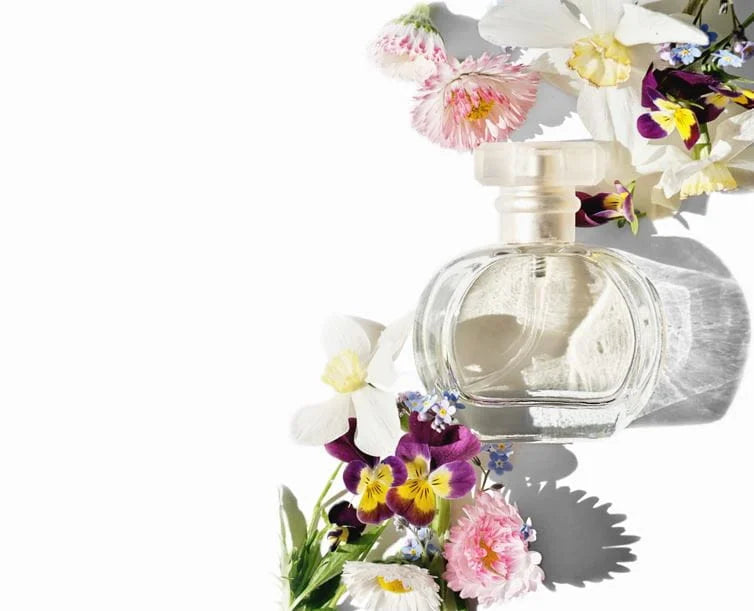
I always wanted to know how to make a spring floral eau de parfum. I remember my tiny child's hands stripping rose petals from the rose bushes in our garden (sorry, Mom), and plunging them into jars of water and placing them in the sun.
We would jar up hope!
Hoping that the volatile essential oil from the petals would form a mystical and magical infusion in the water if left to soak overnight. Often, we would end up with beautiful flower-scented water, but most of the time we forgot about it for a day or two and ended up with a grim, smelly, gloopy mess.
It always made me think there must be a better way of creating a perfume. Of course, there was, but too young to have discovered traditional perfumery processes like enfleurage or distilling, I remained unaware that you could buy ingredients to help you do it.
Honestly, once you have perfumery alcohol and essential oils…you are more than halfway there.
Make Perfume At Home Simply
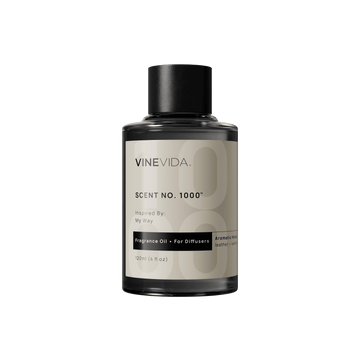
The simplest way to make your own perfume is to use fragrance oils that have been blended by professional perfumers and use those for your creation. The hard work of balancing ethereal top notes, floral heart notes, and grounding base notes has been done for you, thereby creating ready-made, alluring aromas.
Niggling issues like what middle notes to use, or how to use orris root fixatives to make the scent last, were all resolved before you even took the cap off the bottle.
If you are looking for how to make a floral eau de parfum in the least amount of time, with the least amount of fuss, and most of all without breaking the bank, fragrance oils are the way to go.
If You Are New To The How to Make Floral Perfume Series
Let’s catch you up.
We have already covered a lot about balancing ratios of oils and perfume alcohol in
In there, you’ll find lots of recipes, but some other useful stuff was
-
- Why fragrance concentration affects the longevity of your scent
- How to create perfume bases with or without carrier oil
- What IFRA Skin safety numbers mean, and how to use them
- How to blend fragrance concentration blends if you want to
And of course, don’t forget there are some great lists of my favorite springtime-inspired fragrance oils. (Since VINEVIDA now offers many hundreds of oils, you can thank me for that later!)
In this article, we will be talking about how to make your floral eau de parfum with fragrance oils, but of course, you could equally use essential oils if you wanted (although it is more difficult to do so. But again, here’s the gen on how to do that: Craft Your Scent: Cologne With Essential Oils.
Many principles of using essential oils are the same as using fragrance oils… but because fragrance oils are pre-blended, you save yourself a lot of the hard work.
Then, of course,e you could also blend your fragrance oils with essential oils to give yourself limitless scope for really exciting perfume recipes. Honestly, there are so many variations possible that it would also be impossible to run out of fragrance combinations.
Fragrance Concentration
A quick recap of the fragrance concentrations needed to create an eau de parfum.
| Eau de cologne (EDC) | Eau de toilette (EDT) | Eau de parfum (EDP) | Extrait de parfum / parfum (EP / P) | |
|---|---|---|---|---|
| Concentration | 3–5% | 4–8% | 8–15% | 15–30% |
| Longevity | 1–3 hours | 3–5 hours | 6–8 hours | 8–12+ hours |
| Projection | Strong, but very short-lived | Moderate to strong | Moderate | Low to moderate |
Remember that the only difference between an eau de toilette and an eau de parfum is how much fragrance concentrate is used. It might be tempting to take an eau de cologne recipe and think I liked that, so I am just going to add more fragrance oil into the next one. Mathematically, that does make sense, because the difference between 3%-5% concentration for eau de cologne to 8-15% eau de parfum does mean you need two to three times as much, but doubling up could be disastrous because we might inadvertently breach the maximum limits of how much of a particular fragrance oil we can use on the skin. We must always be mindful that these fragrance oils could irritate or damage the skin if we use too much, so we need to create new recipes for our spring floral eau de parfums.
First Decision - Shaved or Unshaved?
The first decision when you are making any kind of perfume is to decide if it is to be used on shaved or unshaved skin. This has very real bearings on an eau de parfum because, in the safety guidelines, maximum dilutions are really restricted in categories 3A and 3B (Unshaved skin), which makes sense. After all, who wants to put something so harsh on skin made delicate by a razor?
So, if we want to use as much as 8-15%, then really we need to be opting for categories 4A and 4B and pledging that this is a product that should not be used on unshaved skin.
The maximum dilution rates are much more generous in categories 4A and 4B, and are much easier to work with as a beginner.
I think you will find these fragrance concentrate blends quite different from the ones I previously provided for the eau de colognes and eau de toilettes. I had fun creating them, so I dearly hope you enjoy creating your own perfume from them
Incidentally,y if you did want a quick peek at what the differences in dilution rates might look like, pop over to How To Make A Springtime Floral Eau de Toilette, where I have made a comparison
table for you.
One Last Technical Question: Carrier Oil in Perfume?
Adding a splash of carrier oil tends to fix the scent onto your skin a bit longer.
It is optional. You don’t need to do it, but on balance, I think it is worth it.
You get a slightly heavier, silkier consistency that feels more luxurious. It will nourish your skin a little, and that depth makes the scent linger.
Spring Floral Eau De Parfum Fragrance Concentrate Blends
When it came to designing these blends for spring floral eau de parfums, I wanted to capture more of the springtime feeling than could be discerned using flowers used for essential oils.
I wanted to:
-
- Evoke the delicacy and fragility of flower petals like the Cherry blossom and those first lovely Roses.
- Capture fragrant flowers using their natural perfume to attract those first bees.
- Emulate the types of flowers you find in the garden in spring, but also different flowers you might find in fields and hedgerows.
How To Make A Spring Floral Eau De Parfum
All recipe blends in this article are designed for use on unshaven skin and are created with VINEVIDA’s Soaps & Candles fragrance oils. I have designed you a perfume base, and the recipe will make you 100ml of Eau De Parfum.
(I have added a carrier oil to nourish your skin a bit more, but whether you decide to go with the carrier oil or not is your choice entirely.)
You should then add your fragrance oils at 8% - 15% dilution
Then, after the perfume base recipe, I have Springtime Floral Fragrance Oil Blends. These are blends of two or more fragrance oils together. The recipes make the perfume concoction, which you must then dilute with your Eau De Parfum Alcohol Base.
This is a very quick and simple way to make perfume at home
So first:
Recipe for the Eau De Parfum Alcohol Base
Equipment:
I advise having a set of equipment reserved only for perfume making. Where possible, use glass or stainless steel utensils because the scent of the fragrance oils will linger on plastic. Also, fragrance oils are never suitable for ingestion, so we don’t want to use any equipment for food prep thereafter.
-
-
Measuring jug
-
Spoon or glass blending stick
-
Funnel
-
100ml decorative fragrance bottle, make sure it has an air-tight lid to reduce evaporation
-
Oil and waterproof label
-
Ingredients:
Deciding whether or not to use carrier oil in your blend determines how much carrier oil and alcohol are ultimately required.
Base for EDT Without Carrier Oil
-
- 60 ml of Perfumer’s Alcohol
- 25 ml of Distilled Water + extra for topping up
- 8- 15ml of Soaps and Candles Fragrance Oil Concentrate (recipes below)
Base for EDT With Carrier Oil
-
- 50 ml of Perfumer’s Alcohol
- 10 ml of Jojoba or Sweet Almond carrier oil
- 25 ml of Distilled Water + a little extra for topping up
- 8- 15 ml of Soaps and Candles Fragrance Oil Concentrate (recipes below)
Method:
-
- If you use a carrier oil, combine both your carrier oil and 8-15ml of your fragrance concentrate blend and mix well together. Measure out your perfumer’s alcohol carefully and add it to the oil mix.
- Stir it all well and don’t panic if it looks cloudy at first! This is completely normal and to be expected. Eventually, it settles, disperses, and becomes clear again. Lastly, add your distilled water up to the 100ml mark and stir well.
- For ease, use a glass or stainless steel funnel and decant the eau de parfum into a fragrance bottle of your choice. All the better if it is beautiful and decorative. Make sure your bottle has an airtight lid to reduce the chance of your perfume simply evaporating. Clearly list all ingredients on an oil and waterproof label for obvious safety reasons.
- If it is going to sit out in your bedroom or bathroom, it is worth spending a little extra effort to create a beautifully designed label.
- Please be patient and allow your spring floral eau de parfum to sit for at least 24 - 48 hours to mature and meld a little before use. Don’t worry, we know you will take a sneaky peek, and we’d want to too - but try to sit on your hands!
- Ideally, it is best left to mature for up to 6 weeks to allow the scent notes to fully meld together and mature fully. I assure you that it is well worth leaving your spring floral eau de parfum this long, if you can bear to.
SPRINGTIME FLORAL EAU DE PARFUM FRAGRANCE OIL CONCENTRATE BLENDS
First Rose Bloom
I absolutely relish and delight in my first rose bloom. I will be wandering the garden for a couple of weeks, assessing which perfectly formed bud is likely to burst forth into a riot of delicate petals first. My David Austin - Golden Celebration is usually the winner.
This spring floral eau de parfum captures the delicacy of those first unfurling petals and asks you to surrender to the hope of better things to come. It is soft, uplifting, and finished with a deeper, more sensuous and romantic note. I think it is sublime, just like the first rose bloom.
Makes 15ml
-
- 7 ml or 140 drops of NO. 33 - Fresh Cut Roses 68.71%
- 5 ml or 100 drops of NO. 173 - Powdery Rose 10.75%
- 2 ml or 40 drops of NO. 3104 - Inspired by: Café Rose by Tom Ford 15.28%
Method of use: Blend your concentrate, then add to 85 ml of the eau de parfum base.
Tumbling Wisteria
When I go over to meet my sister, Liz, we like to take our mother for lunch at Stockton Bury Gardens in Herefordshire (UK). It has these enormous vines of lilac blue wisteria; honestly, the longest tendrils of flowers you have ever seen. The smell wafts across the courtyard long before you can see it. This aroma is airy, dreamy, and captivating. It stirs the senses.
In this blend,d I have taken that wisteria dream and woven it through with sumptuous blue berries and a ribbon of soft, creamy Vanilla to create a very wearable fruity- floral eau de parfum.
Perfect for daytime and carefree nights.
Makes 15ml
-
- 9 ml or 180 drops of NO. 1409 - Inspired by: Wisteria Blue by Nest 93.99%
- 5 ml or 100 drops of NO. 145 - Water Lily 10.77%
- 1 ml or 20 drops of NO. 8 - Berry Blue 45.45%
Method of use: Blend your concentrate, then add to 85 ml of the eau de parfum base.
Two Worlds Collided
I confess, I love clashing colors, a nd so the idea of using that as a basis for creating a spring floral eau de parfum very much appealed to me.
Nature has this delicious habit of contrasting her colors. Red and green predominate in winter, with plants like holly, viburnum, and cotoneaster. While peach and blue echo the cottage flower beds of midsummer, airy drifts of peach penstemon are backed by towering spires of sky blue delphiniums. Spring, which comes alive with vibrant shades of purple and yellow. Delicate crocuses adorn the feet of nodding daffodils and fragrant narcissus. Lilac anemones snuggle into mounds of wild violets. This scent carefully balances those luminous and radiant yellow flower aromas with some of the more powdery purple flowers, like Violets. Light enough for day, deep enough for night, perfect for where two worlds collide.
Makes 15ml
-
- 6 ml or 120 drops of NO. 1816 - Inspired by: Mimosa & Cardamom by Jo Malone 69.16%
- 6 ml or 120 drops of NO. 133 - Violets 21.50%
- 3 ml or 60 drops of NO. 1906 - Inspired by: Animalique by Byredo 6.40%
Method of use: Blend your concentrate, then add to 85 ml of the eau de parfum base.
Leafy Woods (Masculine)
This is the perfect time to take a stroll through the woods, old leaves crunch underfoot, releasing their moist, earthy aroma. Bare branches are tipped with bright green buds, and in places, the first unfurling leaves reveal themselves to us. I wanted to create a more masculine feeling spring floral eau de parfum. It still has a floral, powdery violet heart but is bright, vital,l and vibrant with refreshing green and aquatic notes, sitting in a bed of earthy woods, smooth resin,s and alluring musks. Perfect for uplifting and enlivening your day.
Makes 15ml
-
- 8 ml or 160 drops of NO. 3710 - Inspired by: L'Homme Libre Cologne Tonic (Men) by Yves Saint Laurent 27.05%
- 3 ml or 60 drops of NO. 1826 - Inspired by: Violet & Amber Absolu by Jo Malone 7.53%
- 2 ml or 40 drops of NO. 110 - Green Tea & Vetiver 19.58 %
- 2 ml or 40 drops of NO. 21 - Cedarwood & Amber 30.1%
Method of use: Blend your concentrate, then add to 85 ml of the eau de parfum base.
Creative note: If you love the green woody aroma of this but want something more feminine, you have space in the IFRA safety to up the amount of NO. 1826 to 7.5%. I would balance this by using 6ml of NO. 3710 and 1826 and 1.5 ml of NO. 21 and NO. 110. It leans more into those soft, powdery violet heart notes, but still has that vital and vibrant greenery and earthy woods.
Dark & Opulent (Unisex)
How do you take a light, delicate, and airy spring floral eau de parfum and turn it dark and opulent? Not just that, but make it suitable across genders? Ain’t no two ways about it, it requires a thoughtful process and is a judicious balancing act.
You want to keep all of the original elements of a spring perfume…
-
- Fresh, airy & uplifting openings
- A full bloom floral heart
- Green & botanical accents, Light sweetness 4 Luminous & radiant projection
… but then drop everything down a notch or two. Make it deeper, darker, and inviting, add more sensual heart and base notes to make you feel lusciously enveloped and cosseted.
The Design Process
I will do my best to explain my choices, so you understand the construction process of this blend. It will help you learn for yourself how to create balanced and appealing blends. I chose the heart chord of NO. 1922 - Inspired by: La Tulipe by Byredo because it is a good, strong spring-inspired fragrance, and it is robust enough to hold its own alongside deeper notes.
It literally ticks every element of a true spring fragrance listed above, too.
Navigating Low Skin Safety Rates
However, it has a lower skin safety dilution rate than I would like for a heart chord, so I will just give it a boost with NO. 141 - Pink Lilac Bouquet that gently echoes some of its main notes and helps with the overall proportional balance of the heart of the aroma. To decide where to go next, let’s take a look at her fragrance notes in the table below. The cyclamen and rhubarb notes reminded me of NO. 1406 - Inspired by: Midnight Fleur by Nest, and it felt like the perfect pairing to make things richer and more sensuous with Orchid and Vanilla aromas. It certainly brings darker notes with Black Amber and exotic woods. It also adds those richer, deeper, and more opulent aspects,
Tipping the Gender Balance
However, the scent profile at this stage is still distinctly feminine-leaning. Therefore, we need to introduce earthy, woody, leathery, or smoky tones to tip that balance. Fortunately, all of those aromas will add much-needed textural interest, sensuality, and aromatic depth.
I just knew that the collection of fragrance oils inspired by Tom Ford would give me that delicious depth and dark richness I was looking for. I tussled between NO. 3117 - Inspired by: Noir de Noir by Tom Ford and NO. 3119 - Inspired by: Ombré Leather by Tom Ford for the longest time. In the end, deciding that NO. 3119 had the perfect balance of spring lightness but also the depth and richness that would not overwhelm the heart chord of NO. 1922.
Understanding The Process Of Construction
Take a look at all the fragrance notes for yourself, see how they are reinforced by repetition throughout (highlighted in bold). Explore how we introduced new complementary notes and harmonious accords to the fragrance profile to tip the gender balance and maintain spring lightness in a heavier, richer blend.
Why not take a moment to assess what direction you might have plumped for if you were creating this blend? What would you have done?
Makes 15ml
-
- 7 ml or 140 drops of NO. 1922 - Inspired by: La Tulipe by Byredo 7.75%
- 4 ml or 80 drops of NO. 1406 - Inspired by: Midnight Fleur by Nest 44.25%
- 2 ml or 40 drops of NO. 141 - Pink Lilac Bouquet 91.66%
- 2 ml or 40 drops of NO. 3119 - Inspired by: Ombré Leather by Tom Ford 16.09%
Method of use: Blend your concentrate, then add to 85 ml of the eau de parfum base.
Final Thoughts
Think about capturing the brightness of the sunshine with top notes. Top notes feel inspirational and full of hope. Floral notes are full of hope, but don’t ignore herbal or even conifer middle notes for that lovely sense of green. Woods and resins make great base notes.
You might think about mossy notes, or smoky bonfires, even a sugary Easter lunch table, maybe. Whether it is Easter bonnets or those first spectacular stately homes opening their gardens to invite you in, there are a million different ways to be inspired by spring.
So now you know how to make a Floral Eau de Parfum, why not set to work on some of these recipes, but also grab yourself a notebook to capture what springtime looks like around you, then capture that in scent.